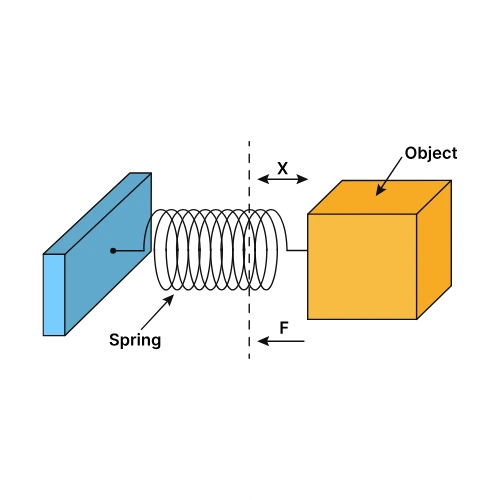

Calculate torque from force and lever arm, from power and RPM, or from moment of inertia and angular acceleration. Results in N·m, lb·ft, kgf·m, dyn·cm and more.
τ = F · r · sin(θ). Maximum torque occurs when the force acts perpendicular to the lever arm (θ = 90°).τ = P / ω = P · 60 / (2π · RPM). If a mechanical efficiency η is entered, torque is computed from the effective shaft power P · η. Use 100% for ideal conversion.τ = I · α. This is Newton's second law for rotation: torque is the rotational analogue of force, and the moment of inertia is the analogue of mass.P = τ · 2π · RPM / 60. This shows how much mechanical power this torque produces when the shaft spins at the chosen speed.| Unit | Symbol | Value |
|---|
| Property | Value |
|---|
| Quantity | Value |
|---|
| # | Torque (N·m) | Mode | Power @ RPM | Time |
|---|
-
Select a citation style above. Click the citation text to select it all, then copy.
ADVERTISEMENT







Founder & CEO, Toolraxy
Faiq Ur Rahman is a web designer, digital product developer, and founder of Toolraxy, a growing platform of web-based calculators and utility tools. He specializes in building structured, user-friendly tools focused on health, finance, productivity, and everyday problem-solving.
User Ratings:
ADVERTISEMENT
ADVERTISEMENT
Torque is the rotational effect of a force applied at a distance from a pivot, equal to force times lever arm times the sine of the angle between them. Its SI unit is the newton-meter (N·m). A force pushing straight through the pivot produces zero torque; a force at 90° to the lever arm produces the maximum.
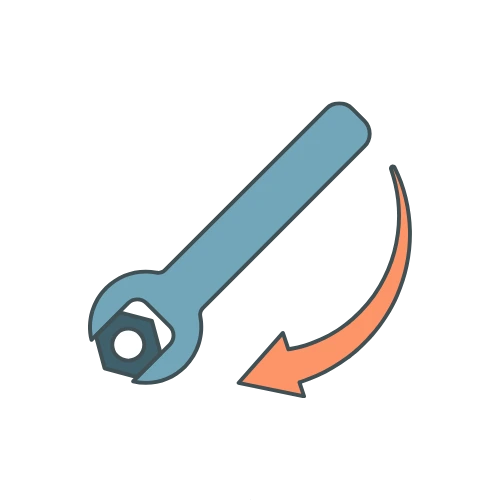
The definition sounds academic until you tighten a bolt. A wrench handle is a lever arm, your hand supplies the force, and the angle between them decides how much twisting effect reaches the fastener. Engineers treat torque as the rotational analogue of force, which is why Newton’s second law for rotation reads τ = Iα instead of F = ma. The same quantity appears in bicycle bottom brackets, automotive lug nuts, electric motor shafts, and industrial valve actuators. The International Organization for Standardization defines the fastener torque classes that most mechanical work references, and the conversion between N·m and lb·ft is fixed by NIST Special Publication 811. If you are working backward from a known torque and lever arm to find the force, the force calculator uses the same relationship solved the other way.
Pick the mode that matches your known quantities, then enter the values in the units you have. The tool converts to SI internally and shows the result in nine torque units. For the force mode, three inputs are enough: force, lever arm, and the angle between them.
Select Force × lever arm in the mode row.
Enter the applied force and choose its unit (N, kN, lbf, kgf, ozf, dyn, or mN).
Enter the lever arm and choose its unit (m, cm, mm, km, in, ft, or yd).
Set the angle between the force and the lever arm; 90° gives maximum torque, 0° or 180° gives zero.
Read the hero result and the unit table below it.
If you want the power that torque produces at a given shaft speed, enter a reference RPM in the power-output section.
For power mode, enter power (kW, W, MW, hp, PS, or BTU/h), RPM, and an optional efficiency from 0–100%. For inertia mode, enter the moment of inertia in kg·m², g·cm², slug·ft², or lb·ft², then angular acceleration in rad/s², deg/s², rev/s², or RPM/s.
Torque equals force times lever arm times the sine of the angle between them: τ = F · r · sin(θ). In power mode, torque equals shaft power divided by angular velocity: τ = P / ω, with ω = 2π · RPM / 60. In inertia mode, torque equals moment of inertia times angular acceleration: τ = I · α.
Formula: τ = F × r × sin(θ)
τ = P × η / ω
τ = I × α
In the force equation, F is in newtons, r is in metres, and θ is the angle between the force vector and the lever arm. The sine factor is why a push at 90° delivers full torque and a push along the handle delivers nothing. In the power equation, P is the shaft power in watts, ω is angular velocity in radians per second, and η is mechanical efficiency as a decimal; a 90% efficient gearbox passes only 90% of the input power to the output shaft. In the inertia equation, I is the moment of inertia in kg·m² and α is angular acceleration in rad/s². The tool supports unit switching for every input: force in seven units, length in seven, power in six, inertia in four, and angular acceleration in four.
A machine designer has a 3 kW synchronous motor rated at 2,100 RPM and needs the shaft torque. Efficiency is 92%, so the shaft receives 2,760 W.
Step one: convert RPM to angular velocity. ω = 2π × 2,100 ÷ 60 = 219.91 rad/s.
Step two: multiply power by efficiency. 3,000 W × 0.92 = 2,760 W.
Step three: divide effective power by angular velocity. 2,760 ÷ 219.91 = 12.55 N·m.
Step four: convert to lb·ft. 12.55 ÷ 1.35582 = 9.26 lb·ft.
The result is about 12.6 N·m at the shaft. A comparable 3 kW motor in a manufacturer’s catalogue lists 13.6 N·m at 2,100 RPM with 92.3% efficiency, so the arithmetic lines up with published data. If the same torque were applied through a 0.2 m lever arm instead of a shaft, the equivalent force at the arm would be 62.8 N.

The table lists dry tightening torque for common inch and metric fasteners at room temperature. Values are reference ranges from published fastener charts; they do not override the equipment manufacturer’s specification for a specific joint.
| Fastener size and grade | Dry tightening torque |
|---|---|
| 1/4″-20 SAE Grade 5 | 11 N·m (8 lb·ft) |
| 5/16″-18 SAE Grade 5 | 23 N·m (17 lb·ft) |
| 3/8″-16 SAE Grade 5 | 42 N·m (31 lb·ft) |
| 7/16″-14 SAE Grade 5 | 66 N·m (49 lb·ft) |
| 1/2″-13 SAE Grade 8 | 142 N·m (105 lb·ft) |
| M6 ISO 898 class 8.8 | 9.5 N·m (7 lb·ft) |
| M8 ISO 898 class 8.8 | 23 N·m (17 lb·ft) |
| M10 ISO 898 class 8.8 | 46 N·m (34 lb·ft) |
| M12 ISO 898 class 8.8 | 80 N·m (59 lb·ft) |
| M16 ISO 898 class 8.8 | 193 N·m (142 lb·ft) |
Lubricated threads take roughly 25–30% less torque for the same clamp load, so do not apply a dry-chart value to an oiled bolt. The RivCut fastener torque chart publishes the dry and lubricated columns side by side, and the MIBearings torque reference explains why the manufacturer’s spec overrides any generic table.
These bands show where typical torque values sit across everyday and industrial equipment. They are context for interpreting a result, not calculator output.
| Application or component | Typical torque range |
|---|---|
| Bicycle stem and seatpost bolts | 5–8 N·m |
| Bicycle crank and bottom bracket | 35–50 N·m |
| Small electric motor, 1 kW class | 5–8 N·m at 2,000–3,000 RPM |
| Mid-size electric motor, 3 kW class | 10–15 N·m at 2,000–3,000 RPM |
| Automotive lug nut, passenger car | 90–140 N·m |
| Automotive wheel hub and axle nut | 150–350 N·m |
| Industrial gearbox output shaft, small | 200–800 N·m |
| Large diesel engine crank bolt | 400–1,000 N·m |
Torque is a twisting force measured in N·m; power is the rate of doing work, measured in watts. They are linked by rotational speed: power equals torque times angular velocity. A motor can produce high torque at low speed and still deliver modest power, or high power with modest torque at high speed.
| Dimension | Torque vs power comparison |
|---|---|
| Definition | Torque is the rotational effect of a force at a distance; power is the rate at which work is done. |
| Unit | Torque uses N·m, lb·ft, or kgf·m; power uses W, kW, or hp. |
| Relationship | Power = torque × angular velocity; torque = power ÷ angular velocity. |
| What it tells you | Torque tells you the twisting force available; power tells you how fast that force can do work. |
| High torque, low power | A geared winch lifts a heavy load slowly: high torque at low RPM. |
| High power, low torque | A small high-revving motor spins fast with modest torque: high power at high RPM. |
| Which one to size for | Fastener and joint design sizes for torque; motor and drive selection sizes for both. |
A lug nut needs a torque spec, not a power rating. A motor needs a power rating and a torque-speed curve. This calculator’s power mode bridges the two by converting a power and RPM pair into shaft torque, and the force mode handles the fastener side directly.
τ = F × r × sin(θ). Force times lever arm times the sine of the angle between them. At 90° the sine is 1, so torque is simply force times distance.
Divide the shaft power in watts by the angular velocity in rad/s. For a 3 kW motor at 2,100 RPM, that is 3,000 ÷ 219.9 = 13.6 N·m before efficiency losses.
Torque is a twisting force; horsepower is a rate of doing work. Horsepower equals torque times RPM divided by a constant, so an engine can make high torque at low RPM and still produce modest horsepower.
Multiply by 0.73756, or divide by 1.35582. A 100 N·m torque is about 73.8 lb·ft. The calculator’s unit table shows both values side by side.
Passenger-car lug nuts typically fall in the 90–140 N·m range, but the vehicle manufacturer’s spec always wins. A light compact and a heavy SUV do not share the same value, and neither does an aluminium wheel and a steel wheel.
You can use it to convert between torque units or to sanity-check a spec, but it does not compute clamp load. Thread friction, lubrication, and reuse condition change the torque-to-tension relationship, so follow the manufacturer’s torque-and-angle procedure for critical joints.
For a fixed power, torque and angular velocity are inversely related. Double the RPM and the same wattage produces half the torque. That is why a geared motor trades speed for torque.
Force in N, kN, mN, lbf, kgf, ozf, or dyn; length in m, cm, mm, km, in, ft, or yd; torque output in nine units including N·m, lb·ft, lb·in, kgf·m, and dyn·cm; power in W, kW, MW, hp, PS, or BTU/h; inertia in kg·m², g·cm², slug·ft², or lb·ft².
Moment of inertia is a body’s resistance to angular acceleration, the rotational analogue of mass. In τ = Iα, a larger I means more torque is needed to reach the same angular acceleration.
Rearrange τ = F × r × sin(θ) to F = τ ÷ (r × sin(θ)). A 50 N·m torque applied at a 0.4 m arm perpendicular to the handle needs 125 N of force.
Yes. The tool multiplies input power by efficiency before dividing by angular velocity. A 90% efficient drive at 3 kW delivers 2.7 kW to the shaft, so the output torque is 90% of the ideal value.
Torque wrenches measure applied torque at the drive, and friction inside the thread absorbs part of it before clamp load builds. The calculator gives the ideal input torque; the wrench reading includes friction and any extension or adapter geometry.
Torque values affect safety-critical joints. This tool performs arithmetic; it does not certify a fastener, a motor, or a lifting device. Always follow the equipment manufacturer’s torque specification and tightening procedure, and use a calibrated torque wrench where the joint matters. The authors accept no liability for assemblies built from the numbers this page produces.
The National Institute of Standards and Technology publishes NIST Special Publication 811, the guide for the SI unit conversions used in the torque unit table, including the exact factors for N·m, lb·ft, and kgf·m.
The International Organization for Standardization maintains ISO 898-1, which defines the mechanical properties and strength classes of metric fasteners referenced in the fastener torque table.
The RivCut fastener torque chart is the source for the dry tightening torque values for inch and metric fasteners in the topic data table.
The MIBearings torque reference chart explains the ISO 898 and SAE J429 grade systems and the rule that manufacturer specifications override generic torque tables.
NORD DRIVESYSTEMS publishes the synchronous motor data used in the worked example, including the 3 kW / 2,100 RPM / 13.6 N·m / 92.3% efficiency point.
The Physics Classroom explains the torque-lever-arm relationship and the sine-of-the-angle factor used in the formula section.
ADVERTISEMENT
ADVERTISEMENT