What Is Angular Velocity?
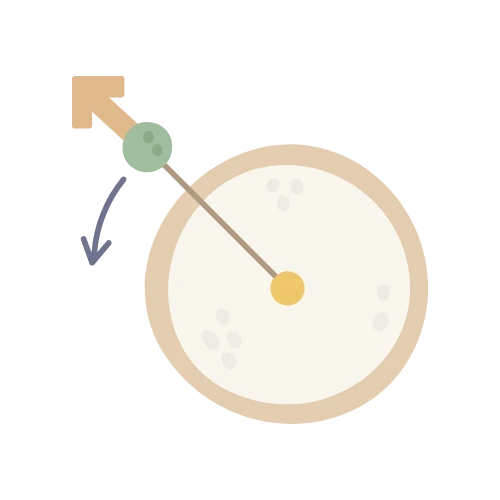
Angular velocity is the rate at which an object rotates around an axis, measured as angular displacement per unit time. In SI units it carries rad/s, and its magnitude is the angular speed how fast the rotation happens, independent of which point on the body you measure . The quantity is a pseudovector: its direction points along the rotation axis, following the right-hand rule .
Physicists distinguish angular velocity from ordinary linear velocity for a practical reason. Every point on a spinning rigid body moves at a different linear speed, the rim of a wheel moves faster than a point near the hub but every point shares the same angular velocity . Dividing linear speed by radius normalizes the motion to a single number that describes the whole body. That number is ω, and it equals v/r for a point at radius r .
The unit radian per second is dimensionally equivalent to the hertz, but convention keeps them separate. Hertz is reserved for ordinary frequency; rad/s is used for angular quantities . One revolution per minute equals 2π/60 rad/s, or about 0.10472 rad/s .
Angular Velocity Formula: Δθ, v/r, RPM, and T
Angular velocity takes a different form depending on which quantities you already know. The code implements four distinct formulas, one per mode:
Formula: ω = Δθ / t when you know angular displacement and time.
Formula: ω = v / r when you know linear velocity and radius.
Formula: ω = RPM × 2π / 60 when you know revolutions per minute.
Formula: ω = 2π / T when you know the period of one revolution.
Δθ is the angular displacement in radians (converted from degrees, revolutions, or gradians before calculation). t is the time interval in seconds. v is linear velocity in m/s. r is radius in meters. T is the period in seconds. The 2π factor appears in the RPM and period formulas because one full revolution covers 2π radians; the RPM formula also divides by 60 to convert minutes to seconds.
A Wheel Rolling at 10 m/s with a 2 m Radius
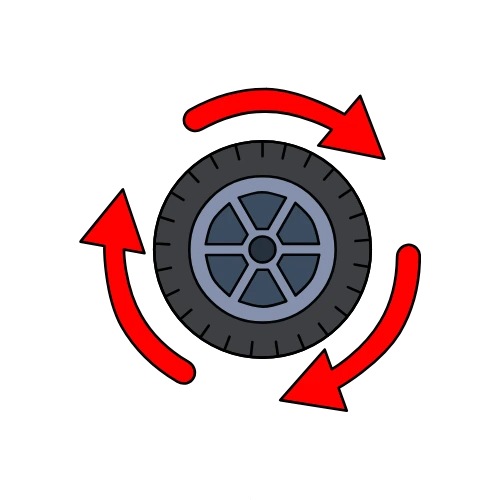
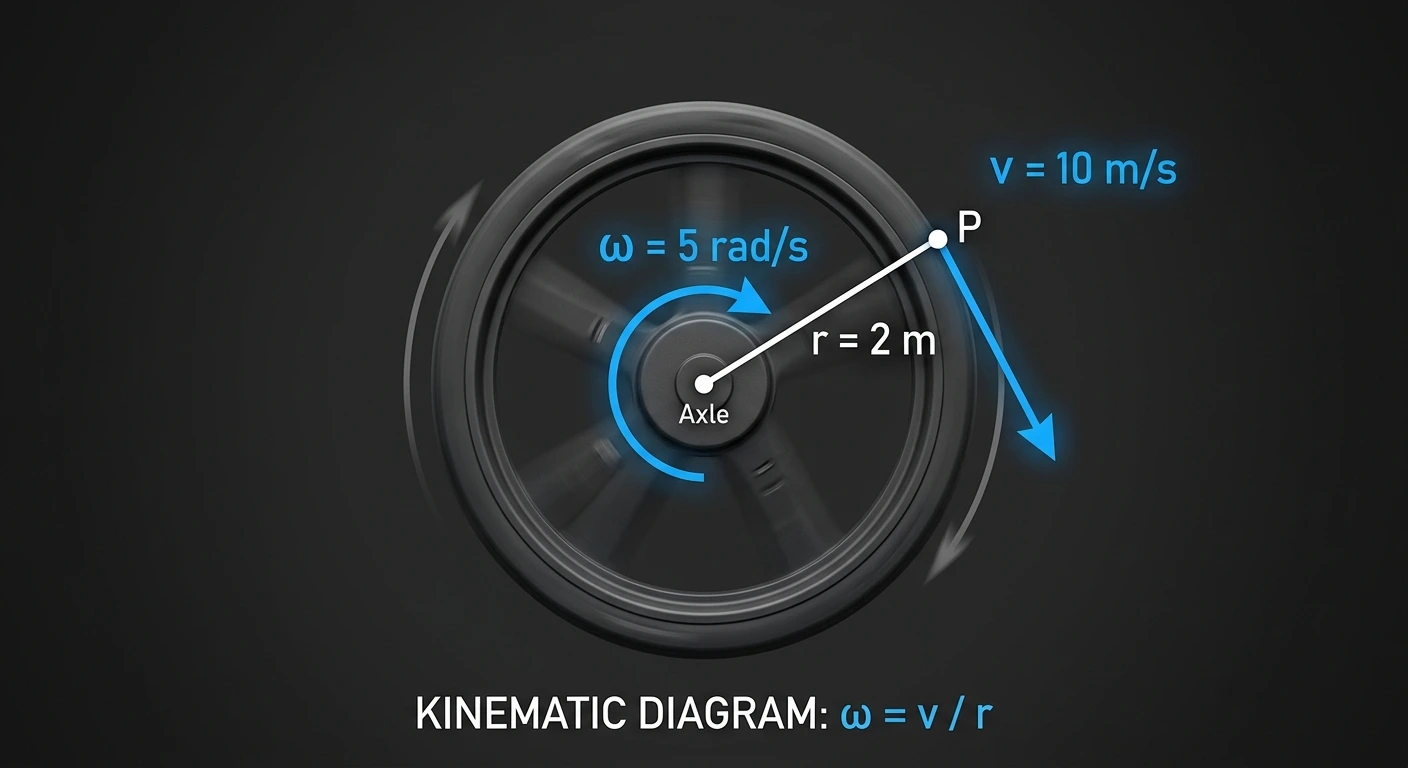
A bicycle wheel with a 2-meter radius rolls forward at 10 m/s. What is its angular velocity? Enter 10 in the linear velocity field with the unit set to m/s, and 2 in the radius field with the unit set to meters. The calculator applies ω = v / r.
The arithmetic is 10 / 2 = 5 rad/s. The unit table fills in the rest: about 286.5 deg/s, 0.7958 rev/s, and 47.75 RPM. The derived quantities show the same result expressed as revolutions per minute.
The verdict banner calls this moderate angular velocity, it sits between 1 and 10 rad/s which places it in the range of everyday motors and slowly spinning wheels. That band is the tool’s own heuristic, not a published standard.
A sanity check confirms the result. A point on the rim travels 10 meters every second. The circumference is 2π × 2 = 4π ≈ 12.566 meters. So the wheel completes 10 / 12.566 ≈ 0.7958 revolutions per second, which is 0.7958 × 2π ≈ 5 rad/s. The linear velocity and angular velocity describe the same motion from different measurement perspectives.

Angular Velocity Values Across Common Rotating Systems
The table below places the calculator’s output range against real rotating objects, using rotational speeds reported in physics and engineering sources. These are Zone 2 reference values, not calculator outputs, the tool computes ω from your inputs, while the table tells you where those inputs sit in the wider world.
The spread runs from a Ferris wheel’s near-stillness to a dental drill’s high-pitch whine. The calculator’s exponential notation kicks in below 10⁻⁶ and above 10¹², so most of these values display in ordinary decimal form.
Frequently Asked Questions
What is angular velocity in simple terms?
Angular velocity is how fast something spins or rotates, measured in radians per second. It tells you the angle an object sweeps through per unit time, regardless of how far from the axis you measure.
How do you calculate angular velocity from RPM?
Multiply RPM by 2π and divide by 60. A motor at 3000 RPM has ω = 3000 × 2π / 60 ≈ 314.16 rad/s. The calculator’s RPM mode performs this conversion directly .
What is the relationship between linear velocity and angular velocity?
Linear velocity equals angular velocity times radius: v = ωr. Equivalently, ω = v/r. A point farther from the axis moves faster in linear terms for the same angular velocity .
How do you find angular velocity from period?
Divide 2π by the period in seconds. A 2-second period gives ω = 2π / 2 = π rad/s, about 3.14 rad/s. The calculator’s period mode does this automatically.
Can angular velocity be negative?
Yes. The sign indicates direction: positive for counter-clockwise rotation, negative for clockwise, following the right-hand rule convention. The calculator preserves the sign from the displacement input.
What is the difference between angular velocity and angular speed?
Angular velocity is a pseudovector with both magnitude and direction. Angular speed is its magnitude, the scalar rate of rotation in rad/s. The calculator reports the signed value, which carries direction information .
How do you convert rad/s to RPM?
Multiply by 60 and divide by 2π. A value of 10 rad/s corresponds to 10 × 60 / (2π) ≈ 95.5 RPM .
What is the angular velocity of Earth’s rotation?
Earth completes one rotation per day, so ω ≈ 2π / 86,400 ≈ 7.27 × 10⁻⁵ rad/s. The calculator would accept 86,400 seconds as the period and return this value .
Does angular velocity depend on radius?
For a rigid body rotating as a whole, the angular velocity is the same at every radius. Linear velocity depends on radius (v = ωr), but ω itself does not. The calculator’s v/r mode uses radius to compute ω from a linear speed, not because ω varies with radius .
Can I use this calculator for a pendulum?
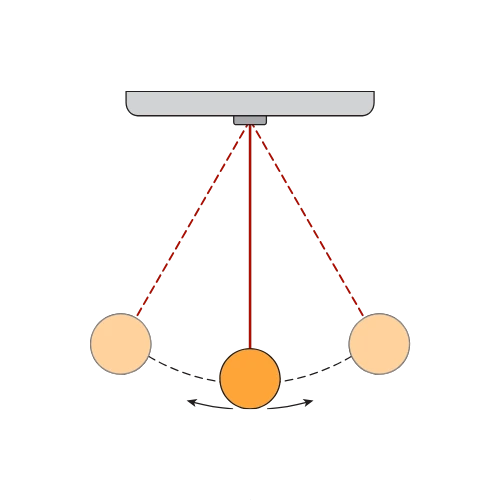
Use period mode and enter the pendulum’s full oscillation period. The resulting ω is the angular frequency of the oscillation, not a rotation rate. The tool does not model the pendulum’s length or gravity; it only converts the period you provide.
Sources:
The definition of angular velocity as the time derivative of angular position, and its status as a pseudovector, follows the treatment in the EPFL physics course materials on rotational kinematics .
The relationship between linear velocity, radius, and angular velocity, v = ωr, or ω = v/r is derived in the Santa Fe Institute’s classical mechanics notes on rotational variables .
The SI convention that reserves hertz for ordinary frequency and uses rad/s for angular quantities, along with the conversion 1 rad/s ≈ 9.55 RPM, is documented in the EPFL reference on the radian per second .