What Is Angular Frequency?
Angular frequency (ω) is the rate at which phase advances in a sinusoidal oscillation or rotation, measured in radians per second. One complete cycle corresponds to 2π radians, so ω = 2πf, where f is the ordinary frequency in hertz . The radian per second is the SI unit for angular frequency, and it is dimensionally equivalent to the hertz both reduce to s⁻¹ but convention keeps them separate to avoid confusing cycles with radians .
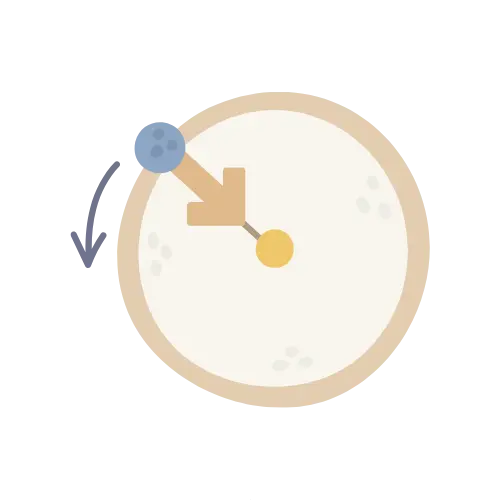
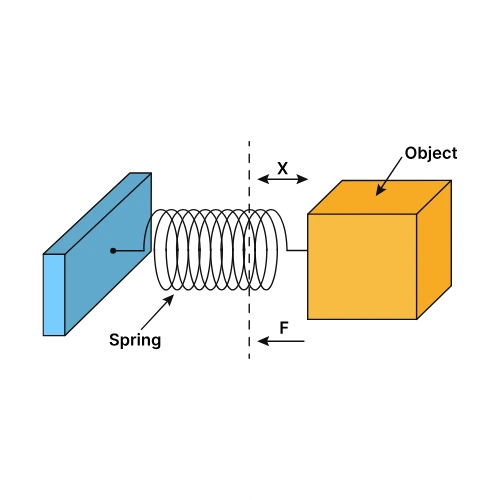
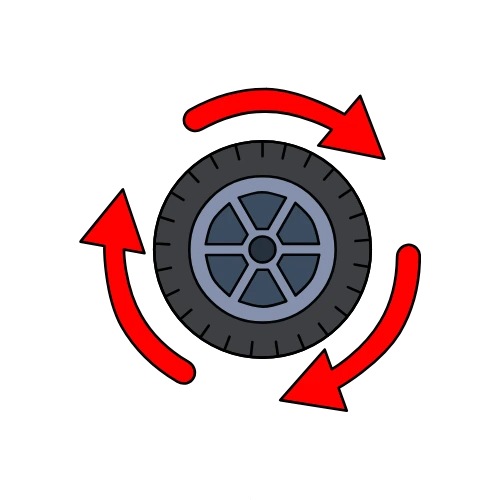
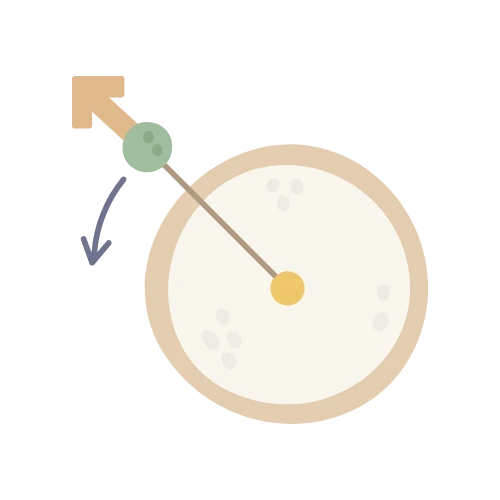
The quantity appears in two related contexts. In oscillations and waves, ω describes how fast the phase of a sine or cosine argument moves, which is why it shows up in equations like x(t) = A cos(ωt) . In steady rotation, angular frequency is numerically equal to angular velocity in rad/s, which is why a motor spinning at 6.28 rad/s has an angular frequency of 6.28 rad/s and an ordinary frequency of 1 Hz . The calculator treats both cases with the same conversion layer: get to rad/s, then derive everything else.
Angular Frequency Formula: ω = 2π/T and ω = 2πf
The core relationships are two lines. From period: ω = 2π / T, where T is the time for one complete cycle in seconds. From frequency: ω = 2π × f, where f is in hertz . The two are equivalent because f = 1/T, so substituting gives ω = 2πf from either starting point.
How Do You Calculate Angular Frequency from Period or Frequency?
Pick the mode that matches what you have in front of you. The result updates as you type.
Choose From period if you know the time for one full cycle. Enter T and select seconds, milliseconds, microseconds, nanoseconds, minutes, or hours.
Choose From frequency if you have hertz (or kHz, MHz, GHz, RPM). Enter f and the tool multiplies by 2π.
Choose From angular velocity if you already have a rotation rate in rad/s, deg/s, rev/s, or RPM. The tool converts to rad/s and derives T and f from there.
Read the hero display: ω in rad/s is the primary result.
Check the context line for the derived period and frequency—these populate automatically regardless of which mode you used.
Use the unit table for the same ω in six common units, and the derived block for a second look at T and f at higher precision.
Worked Example: An Ultrasonic Transducer Check
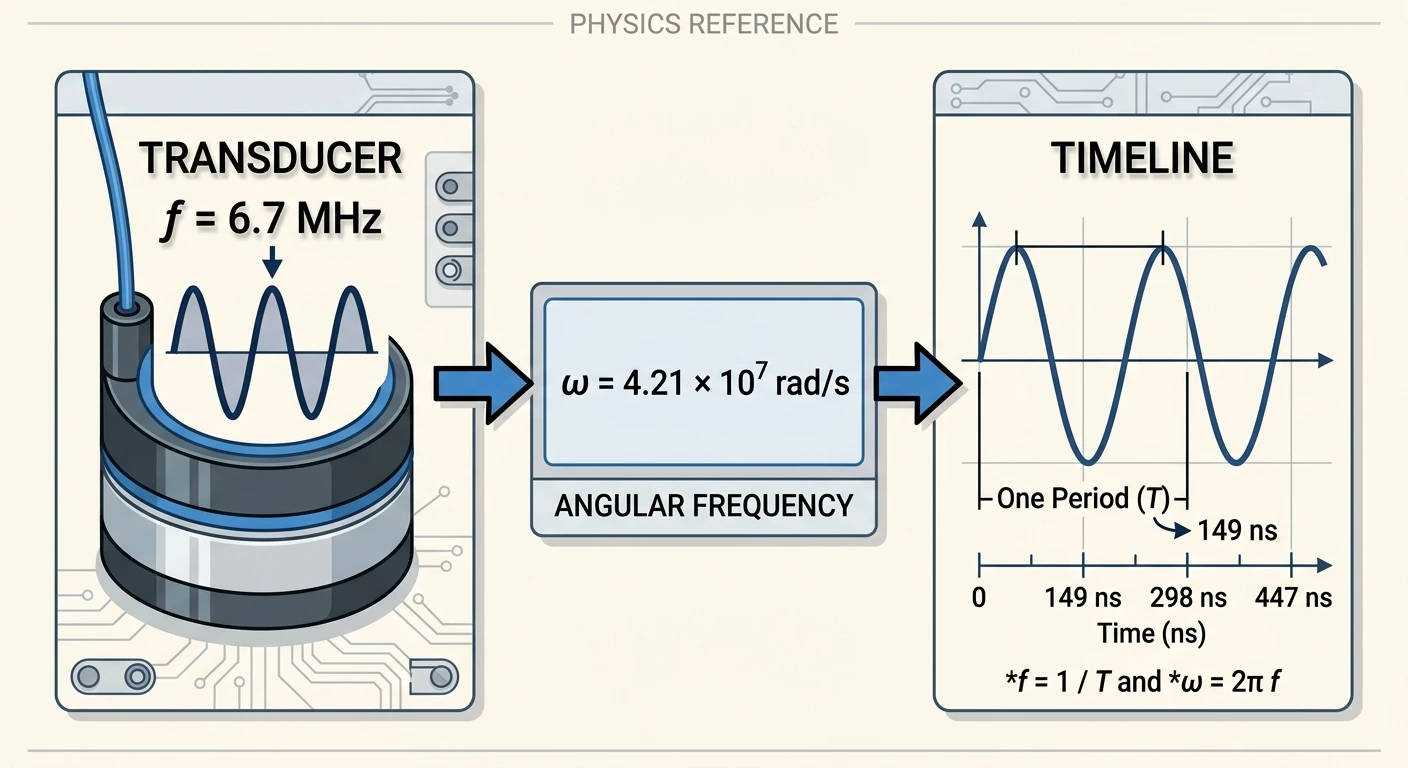
An ultrasonic generator runs at 6.7 MHz. You want the angular frequency and the period for a timing calculation. Set frequency mode, enter 6.7 and select MHz. The tool converts to 6.7 × 10⁶ Hz, multiplies by 2π, and returns ω = 4.21 × 10⁷ rad/s. The derived block reports the period as 1.49 × 10⁻⁷ s, or 149 ns . The verdict banner reads “very high angular frequency” accurate, since the period is far shorter than a microsecond.
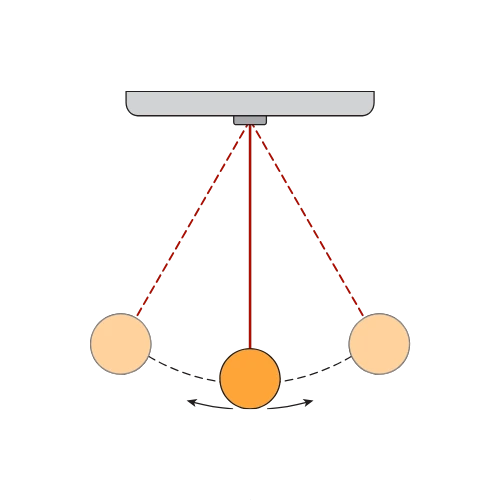
Now flip to period mode with a slower system. A grandfather clock pendulum has a period of 2.00 seconds for a full swing. Enter T = 2.00 s. The tool computes ω = 2π / 2.00 = 3.1416 rad/s. The derived frequency is 0.500 Hz. If you want to check this against the pendulum formula, ω = √(g/L) for a simple pendulum, and solving for L gives about 0.994 m close to the 1-meter clock pendulum that keeps a two-second period . The tool does not compute L, only ω from T. But the agreement confirms the input is physically reasonable.

Angular Frequency Ranges in Common Systems
The table below gives order-of-magnitude ω values for systems you might encounter. These are reference ranges from physics and engineering sources, not tool outputs. They’re useful for sanity-checking whether an input is physically plausible before trusting the derived values.
Frequently Asked Questions
What is the formula for angular frequency?
ω = 2π / T when you know the period, or ω = 2πf when you know the ordinary frequency in hertz. The two are equivalent because f = 1/T. For steady rotation, angular velocity in rad/s is numerically equal to angular frequency.
How do you calculate angular frequency from period?
Divide 2π by the period in seconds: ω = 2π / T. A 0.5-second period gives ω = 12.57 rad/s. The calculator’s period mode handles the division and unit conversion from milliseconds, microseconds, nanoseconds, minutes, and hours.
What units is angular frequency measured in?
The SI unit is radians per second (rad/s). Degrees per second (deg/s), revolutions per second (rev/s), and RPM are common in engineering. The calculator reports all of these plus hertz and kilohertz from a single input .
Can angular frequency be negative?
No, angular frequency is conventionally a positive magnitude. Angular velocity can be negative to indicate direction, but frequency and period are inherently positive quantities. The calculator treats the magnitude in its verdict logic.
What is the difference between angular frequency and angular velocity?
For steady rotation, they are numerically equal in rad/s. Angular velocity is a vector quantity with direction; angular frequency is the scalar magnitude used in phase equations. In oscillations, ω describes phase rate even when nothing is rotating .
How do I convert RPM to angular frequency?
Divide RPM by 60 to get revolutions per second (Hz), then multiply by 2π to get rad/s. A motor spinning at 1,800 RPM has f = 30 Hz and ω = 188.50 rad/s. The calculator’s frequency mode accepts RPM directly and does the conversion.
What is the angular frequency of household AC?
A 60 Hz outlet in North America has ω = 2π × 60 ≈ 377 rad/s. A 50 Hz outlet in Europe has ω ≈ 314 rad/s. This is the ω that appears in AC voltage and current equations like V(t) = V₀ sin(ωt) .
What is the relationship between angular frequency and wavelength?
For a wave, ω = 2πf and the wave number k = 2π/λ, where λ is wavelength. The wave speed is v = ω/k. The calculator does not compute wavelength or wave number it handles only the time-domain conversion between ω, f, and T.