
Find the electron configuration, orbital diagram, and valence electrons for any element
Powered by the aufbau principle · Chemistry Tools

Founder & CEO, Toolraxy
Faiq Ur Rahman is a web designer, digital product developer, and founder of Toolraxy, a growing platform of web-based calculators and utility tools. He specializes in building structured, user-friendly tools focused on health, finance, productivity, and everyday problem-solving.
User Ratings:
ADVERTISEMENT
ADVERTISEMENT
Welcome to the Electron Configuration Calculator, a free, browser-based tool designed to help students, chemistry teachers, and curious minds quickly determine the electron distribution of any element in the periodic table. Whether you’re studying general chemistry, preparing for an exam, or simply exploring atomic structure, this calculator provides both the full configuration and the noble gas shorthand notation.
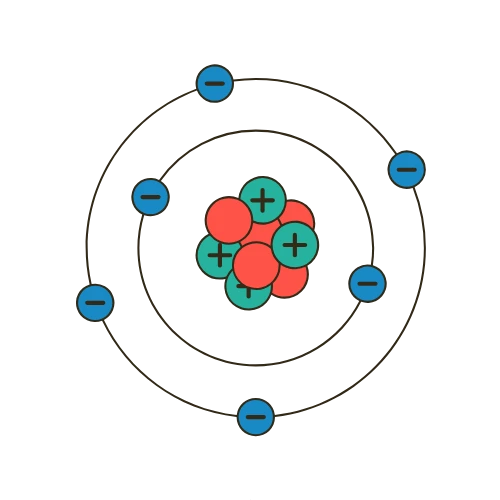
Electron configurations describe how electrons are arranged across atomic orbitals, following the aufbau principle. This arrangement determines how elements bond, their chemical reactivity, and their position in the periodic table. With support for all 118 known elements, this tool also automatically handles the expected exceptions where half-filled or completely filled subshells provide extra stability.
No downloads, no ads, and no data sharing everything runs locally in your browser. Select an element from the dropdown, click calculate, and you’ll see the long-form configuration, shorthand notation, orbital diagram, valence electron count, and the element’s periodic table block. You can also use the quick example buttons to explore common elements like carbon, iron, gold, or uranium.
Select an element from the dropdown menu, which lists all elements from Hydrogen (Z=1) through Oganesson (Z=118).
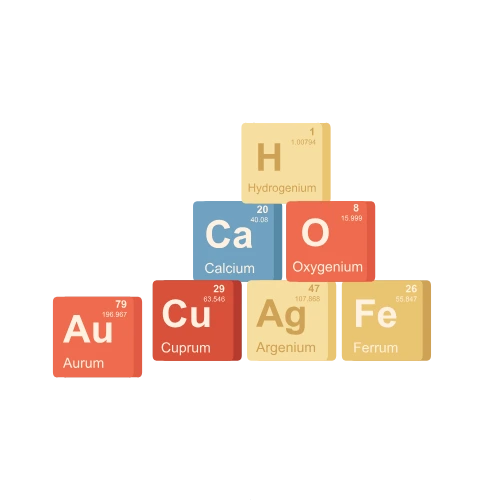
For faster access, click any of the example buttons below the dropdown – options include C, O, Fe, Cu, Ag, and U.
Click the Calculate button (or simply select a new element from the dropdown) to generate the results.
Review the Electron Configuration box, which displays both the full long-form and the noble gas shorthand.
Examine the Orbital Diagram to visualize electron spin and orbital filling.
Check the Valence Electrons count and the Valence Subshells to understand bonding behavior.
Use the Copy button to copy results to your clipboard, or the Share button to send them via your device’s sharing options.
The electron configuration for an atom is built by distributing its Z electrons across atomic orbitals in order of increasing energy. The standard filling order follows the aufbau principle: 1s, 2s, 2p, 3s, 3p, 4s, 3d, 4p, 5s, 4d, 5p, 6s, 4f, 5d, 6p, 7s, 5f, 6d, 7p.
Formula: Configuration = Σ (shell + superscript(electron count)) for all occupied subshells
Each orbital type has a maximum electron capacity: s holds 2, p holds 6, d holds 10, and f holds 14. The calculator distributes electrons into these orbitals sequentially until all Z electrons are placed. When an element’s electron configuration would otherwise end with an energetically unfavorable arrangement, the tool applies known exceptions where half-filled (d⁵, f⁷) or fully filled (d¹⁰, f¹⁴) subshells provide greater stability.
The noble gas shorthand replaces the core electron configuration with the symbol of the preceding noble gas in square brackets, followed only by the valence (outermost) electrons. Valence electrons are defined as all electrons in the highest principal energy level (n), and the periodic block is determined by the last orbital type filled (s, p, d, or f).
Let’s walk through calculating the electron configuration for iron. Iron has 26 electrons to distribute across available orbitals.
Starting from the beginning of the filling order:
1s² (2 electrons used, 24 remaining)
2s² (2 used, 22 remaining)
2p⁶ (6 used, 16 remaining)
3s² (2 used, 14 remaining)
3p⁶ (6 used, 8 remaining)
4s² (2 used, 6 remaining)
3d⁶ (6 used, 0 remaining)
The full electron configuration is: 1s² 2s² 2p⁶ 3s² 3p⁶ 4s² 3d⁶
To get the noble gas shorthand, we find the nearest preceding noble gas – Argon (Ar, Z=18). The core configuration up to Ar is removed and replaced with [Ar]. The remaining electrons are 4s² 3d⁶, giving the shorthand: [Ar] 4s² 3d⁶
For iron, the valence electrons are those in the highest principal shell, n=4. The 4s² subshell contributes 2 valence electrons, giving a total of 2 valence electrons. The valence subshells are 4s², and iron belongs to the d-block of the periodic table because the last filled orbital is 3d.
This configuration explains why iron commonly forms +2 and +3 oxidation states – it can lose its 4s electrons first, followed by one from the 3d subshell.
Saves time by instantly computing configurations for all 118 elements, eliminating the need for manual table lookups or repetitive calculations.
Reduces manual errors by automatically applying the correct filling order and handling all known anomalies – no more forgotten exceptions or misapplied rules.
Provides complete results at a glance – long-form, noble gas shorthand, orbital diagram, valence count, valence subshells, and block all on one screen.
Runs entirely in your browser with no server communication, so your searches remain private and no data is collected or stored.
Works on any device – the responsive layout adapts to phones, tablets, and desktops for convenient use in classrooms, labs, or at home.
Offers instant sharing and copying so you can quickly paste results into homework, reports, or study notes.
The calculator includes a built-in exceptions table for elements where the standard aufbau filling would predict a configuration that is not observed in nature. For chromium (Z=24), copper (Z=29), palladium (Z=46), and others, the tool applies the correct configuration based on experimental evidence. This ensures accurate results for all elements without requiring users to memorize the exceptions.
This calculator is designed for neutral atoms only, it uses the atomic number to determine electron count. For ions, you would need to manually add or subtract electrons and then use the calculator on the resulting electron count, but the current tool does not support charge input. An ion calculator would be a separate tool.
The long-form configuration lists every occupied subshell explicitly, like 1s² 2s² 2p⁶ 3s² 3p⁶ 4s² 3d¹⁰ 4p⁶. The shorthand notation replaces the core electrons (those up to the previous noble gas) with the noble gas symbol in brackets, followed only by the valence electrons. For example, krypton becomes [Ar] 4s² 3d¹⁰ 4p⁶. The shorthand is more compact and easier to read.
The orbital diagram displays electrons using arrows to represent spin. According to Hund’s rule, electrons prefer to occupy empty orbitals within a subshell before pairing up, minimizing electron-electron repulsion. This means you will often see unpaired electrons in p, d, and f subshells. The diagram helps visualize whether an element is paramagnetic (has unpaired electrons) or diamagnetic (all electrons paired).
Valence electrons are defined as all electrons in the highest principal energy level (n). For example, in iron ([Ar] 4s² 3d⁶), n=4 is the highest shell, so only the 4s² electrons count – the 3d electrons are in n=3, which is a lower shell. This matches the standard chemistry convention and explains why transition metals often have variable valence.
The block (s, p, d, or f) indicates which orbital type receives the last electron. Elements in the s-block have their last electron in an s orbital, p-block elements end in p orbitals, d-block elements are the transition metals, and f-block elements are lanthanides and actinides. This categorization is a fundamental way to understand periodic trends.
The aufbau principle works well for most elements up to Z=118, but it is not a fundamental law – it is a useful rule of thumb. For heavier elements, relativistic effects and electron correlation can alter the filling order. The exceptions built into this calculator are based on empirical observation and widely accepted chemistry standards.
When an element has an anomalous configuration, the calculator displays a note explaining that the deviation occurs due to enhanced stability from half-filled or fully filled subshells. This note helps students understand why the configuration differs from the simple aufbau prediction and reinforces the concept of exchange energy and stability.
The configurations for superheavy elements (Z > 104) are based on theoretical predictions and the known filling order, but these elements have extremely short half-lives and limited experimental data. The calculator provides the standard predicted configuration, which is the best available information for these elements. For practical chemistry purposes, configurations for elements up to Z=86 are well-established.
The periodic table is essentially a map of electron configurations. Elements in the same group share the same valence electron configuration. The periods correspond to principal shells being filled, and the blocks correspond to the orbital type being filled. Understanding electron configurations unlocks the logic behind the periodic table’s structure.
ADVERTISEMENT
ADVERTISEMENT