
Compute Minute of Angle, spread, or distance
Powered by Toolraxy · Shooting & ballistics calculator

Founder & CEO, Toolraxy
Faiq Ur Rahman is a web designer, digital product developer, and founder of Toolraxy, a growing platform of web-based calculators and utility tools. He specializes in building structured, user-friendly tools focused on health, finance, productivity, and everyday problem-solving.
User Ratings:
ADVERTISEMENT
ADVERTISEMENT
Input the distance to your target in meters, yards, feet, or kilometers.
Enter the spread (shot group diameter) in centimeters, inches, millimeters, or feet.
Alternatively, type the MOA value you want to work with.
Leave one field blank the calculator will compute whichever value you don’t provide.
View all three results instantly, with the computed value highlighted.
Copy your results or share them directly from the calculator.
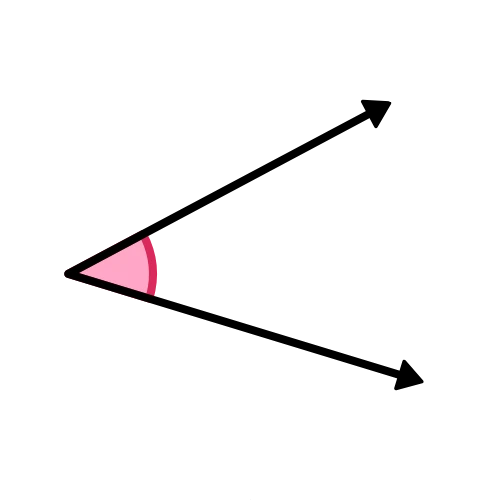
A Minute of Angle represents 1/60th of one degree — a small angular measurement widely used in shooting and ballistics. The relationship between MOA, distance, and spread follows this formula:
MOA = (Spread / Distance) × 3437.74677
The constant 3437.74677 (which is 180/π × 60) converts the ratio of spread to distance into arcminutes. This works because 1 MOA subtends approximately 2.91 centimeters at 100 meters, or about 1.047 inches at 100 yards.
The calculator can rearrange this formula to solve for any missing value:
Spread = (MOA × Distance) / 3437.74677
Distance = (Spread × 3437.74677) / MOA
All unit conversions happen automatically — enter distance in meters, yards, feet, or kilometers, and spread in centimeters, inches, millimeters, or feet. The tool handles the math behind the scenes.
A shooter at the range fires a five-shot group at 100 meters. The group measures 2.91 centimeters across. The shooter hasn’t calculated the MOA yet.
Step 1: Identify the known values — Distance = 100 m, Spread = 2.91 cm.
Step 2: Apply the formula — MOA = (Spread / Distance) × 3437.74677.
Step 3: Substitute the numbers — MOA = (2.91 / 100) × 3437.74677.
Step 4: Simplify — MOA = 0.0291 × 3437.74677 = 1.00 arcminute.
The group is exactly 1 MOA, which is considered excellent accuracy for most rifles. At 100 meters, a 1 MOA group fits within a 2.91 cm circle — about the size of a large coin. If the shooter moved to 200 meters, that same 1 MOA group would spread to 5.82 cm, demonstrating why MOA is such a useful way to describe accuracy independent of distance.
MOA stands for Minute of Angle, an angular measurement equal to 1/60th of a degree. In shooting contexts, it describes the accuracy of a rifle or the size of a shot group relative to distance.
1 MOA equals approximately 1.047 inches at 100 yards. Most shooters use 1 inch as a practical approximation, but the exact value is 1.047 inches for precise calculations.
Multiply the MOA value by the distance in yards and divide by 100, then multiply by 1.047. For metric, multiply MOA by distance in meters and divide by 100, then multiply by 2.91 for centimeters.
The angular measurement remains constant, but the linear spread changes with distance. 1 MOA always covers 1.047 inches at 100 yards, 2.094 inches at 200 yards, and so on — the spread scales proportionally with distance.
MOA and MIL (mil-radian) are both angular measurements used for scope adjustments. MOA uses 1/60th of a degree while MIL uses 1/1000th of a radian. 1 MOA equals 0.2909 MIL, and 1 MIL equals 3.438 MOA.
The calculator uses the exact mathematical relationship between MOA, spread, and distance. Results are accurate to the precision of your inputs. Unit conversions use standard factors for precise results.
Yes, the calculator accepts distance in meters, yards, feet, or kilometers, and spread in centimeters, inches, millimeters, or feet. All combinations are supported.
Most hunting rifles produce 1.5 to 2 MOA with factory ammunition, which is adequate for big game hunting at moderate ranges. A 2 MOA rifle shoots 2-inch groups at 100 yards, 4-inch groups at 200 yards, and so on.
Most scopes have turrets calibrated in ¼ MOA per click, meaning each click moves the point of impact by ¼ MOA. At 100 yards, one click moves impact by about 0.26 inches (¼ of 1.047 inches).
ADVERTISEMENT
ADVERTISEMENT