
Calculate calories burned from steps based on walking pace, distance, and personal metrics











ADVERTISEMENT

Founder & CEO, Toolraxy
Faiq Ur Rahman is a web designer, digital product developer, and founder of Toolraxy, a growing platform of web-based calculators and utility tools. He specializes in building structured, user-friendly tools focused on health, finance, productivity, and everyday problem-solving.
User Ratings:
ADVERTISEMENT
Walking is one of the most accessible forms of exercise, and tracking steps has become a daily habit for millions of people using fitness trackers and smartphones. But what do those steps actually mean for your energy expenditure? This steps to calories calculator converts your step count into estimated calories burned based on your body weight, walking pace, distance covered, and terrain type. Whether you’re aiming for 10,000 steps a day, training for a walking event, or simply curious about your daily activity, this tool provides personalized calorie estimates. The calculator also shows your daily step goal progress and compares walking calories to other activities like running and cycling.
Step 1: Enter your weight and select kilograms or pounds from the dropdown menu.
Step 2: Input your total step count (default is 10,000 steps).
Step 3: Enter the distance walked and select kilometers or miles.
Step 4: Enter your walking pace in minutes per kilometer or minutes per mile.
Step 5: Input your total walking time in minutes or hours.
Step 6: Select your terrain type from Flat Surface, Hilly Terrain, Stairs/Incline, or Sand/Beach.
Step 7: Click “Calculate” to see your calories burned, MET value, calories per step, and food equivalent.
Step 8: View your daily step goal progress in the progress bar showing Sedentary, Active, or Very Active categories.
Step 9: Use the tabs to switch between Steps Calculator and Activity Comparison modes.
Step 10: Click on any common activity in the grid to auto-fill those values and recalculate.
This calculator uses the standard MET (Metabolic Equivalent of Task) formula to estimate calories burned during walking, with adjustments for terrain and pace.
Calories Burned = MET × Weight (kg) × Time (hours)
The calculator determines MET values based on your walking speed and selected terrain:
Flat Surface MET Values:
Slow walking (below 4.5 km/h): 2.8 METs
Moderate walking (4.5-5.4 km/h): 3.5 METs
Brisk walking (5.5-6.4 km/h): 4.3 METs
Power walking (6.5+ km/h): 5.0 METs
Terrain Adjustments:
Hilly terrain: 6.0 METs (fixed)
Stairs/incline: 8.0 METs (fixed)
Sand/beach: 3.8 METs (fixed)
Speed is calculated from your pace input:
For minutes per km: Speed (km/h) = 60 ÷ pace (minutes)
For minutes per mile: First convert to min/km by dividing by 1.60934, then apply formula
The calculator automatically handles these conversions:
Pounds to kilograms: weight (lbs) × 0.453592
Miles to kilometers: distance (miles) × 1.60934
Minutes to hours: duration (minutes) ÷ 60
Minutes per mile to km/h: (60 ÷ (pace ÷ 1.60934))
The calculator also determines calories per step:
Calories per step = Total calories ÷ Total steps
Average reference: A 70kg person walking at moderate pace burns approximately 0.04 calories per step.
The calculator uses an average step length of 0.762 meters (2.5 feet) for distance calculations. Step length varies by height:
Under 160cm: approximately 0.7 meters
160-180cm: approximately 0.762 meters
Over 180cm: approximately 0.85 meters
Standard Mode: Uses the basic MET formula with terrain and pace-based MET values.
Advanced Mode: Applies a steps-based adjustment factor: Calories = (Calories per step × steps) × 1.2. This emphasizes step count in the calculation.
The progress bar categorizes daily step counts:
Sedentary: Less than 5,000 steps
Low Active: 5,000-7,499 steps
Fairly Active: 7,500-9,999 steps
Active: 10,000-12,499 steps
Very Active: 12,500+ steps
The comparison mode calculates calories for equivalent step counts across activities using estimated step rates:
Walking: 100 steps per minute (3.5 METs)
Running: 150 steps per minute (8.0 METs)
Cycling: 60 RPM equivalent (7.5 METs)
Swimming: 80 strokes per minute (8.3 METs)
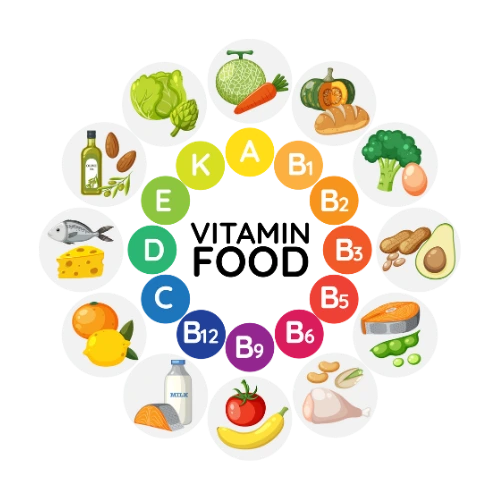
Calorie results are compared to common foods for practical context:
Banana: 105 calories
Apple: 95 calories
Slice of pizza: 285 calories
Chocolate bar: 250 calories
Can of soda: 150 calories
Hamburger: 354 calories
Scenario: A 70kg person walks 10,000 steps covering 8 kilometers in 2 hours (120 minutes) at a 15:00 min/km pace on flat terrain.
Step 1: Convert duration to hours
120 minutes ÷ 60 = 2 hours
Step 2: Calculate speed from pace
60 ÷ 15 minutes per km = 4 km/h
Step 3: Determine MET value
Speed of 4 km/h = Moderate walking = 3.5 METs
Step 4: Apply formula
Calories = 3.5 METs × 70 kg × 2 hours
Calories = 490
Step 5: Calculate calories per step
490 calories ÷ 10,000 steps = 0.049 calories per step
Result: 490 calories burned
Daily step goal status: Active (10,000 steps)
Food equivalent: Approximately 1.7 slices of pizza or 4.7 bananas
Walking converts chemical energy from food into mechanical energy for movement. The calories burned during walking depend on how much work your body performs. Work, in physics terms, equals force multiplied by distance. When you walk, your muscles generate force to move your body weight across a distance.
The step-based approach to tracking activity gained popularity with the 10,000 steps goal, originating from a 1960s Japanese marketing campaign. Despite its arbitrary origin, research has validated that step counts correlate with health outcomes. Each step represents a basic unit of ambulatory activity.
Step length varies significantly among individuals based on height, leg length, and walking style. The average adult step length is approximately 0.762 meters (2.5 feet), meaning 1,312 steps equal approximately 1 kilometer. Taller individuals cover more distance per step, while shorter individuals take more steps to cover the same distance.
The relationship between steps and distance:
Distance = Steps × Step Length
For practical estimation, 10,000 steps typically equals:
7.6 kilometers (4.7 miles) at average step length
6.5-7.0 kilometers for shorter individuals
8.0-8.5 kilometers for taller individuals
The Metabolic Equivalent of Task (MET) system provides a standardized way to express exercise intensity. One MET equals resting energy expenditure—approximately 1 calorie per kg per hour, or 3.5 ml of oxygen per kg per minute.
Walking MET values increase with speed because faster walking requires:
Greater muscle activation
Higher stride frequency
Increased arm swing for balance
More oxygen consumption by working muscles
At very slow speeds (2-3 km/h), walking MET values approach 2.0-2.5—barely above resting. At moderate speeds (4-5 km/h), values reach 3.0-4.0. Brisk walking (6-7 km/h) approaches 5.0 METs, overlapping with light jogging.
Terrain significantly impacts walking energy expenditure:
Flat surfaces: The baseline condition. Energy cost increases linearly with speed.
Hilly terrain: Walking uphill requires overcoming gravity. Each degree of incline increases energy cost by approximately 8-10%. The calculator uses 6.0 METs for hilly terrain, representing moderate hills (5-10% grade).
Stairs and steep inclines: Stair climbing requires lifting body weight vertically with each step. MET values reach 8.0-10.0 depending on stair height and speed. The calculator uses 8.0 METs for stairs.
Sand and soft surfaces: Walking on sand requires additional work because feet sink and push off unstable surfaces. Energy cost increases 20-30% compared to firm surfaces. The calculator uses 3.8 METs for sand, representing moderate-speed walking on packed sand.
The 10,000 steps per day recommendation originated from a 1965 Japanese pedometer called “Manpo-kei,” which translates to “10,000 steps meter.” Despite its marketing origins, subsequent research has supported this target:
Health benefits observed at 10,000 steps:
Reduced cardiovascular disease risk
Improved blood pressure control
Better glucose regulation
Weight maintenance
Enhanced mental health
Modern research suggests:
7,000-8,000 steps may provide similar benefits for older adults
12,000-15,000 steps may be optimal for weight loss
Benefits plateau around 10,000-12,000 steps for most outcomes
Intensity matters—brisk steps confer more benefit than slow steps
Different step counting methods have varying accuracy:
Smartphone pedometers: Use accelerometers to detect steps. Accuracy ranges 90-95% for walking but decreases with phone placement (pocket vs. hand vs. bag).
Fitness trackers: Wrist-worn devices detect arm swing correlated with steps. Accuracy 95-98% for walking, but may count non-step movements.
Dedicated pedometers: Hip-worn devices directly measure step impacts. Most accurate for walking, less accurate for slow shuffling.
Manual counting: The gold standard for accuracy but impractical for daily use.
Step counting provides health benefits independent of weight loss:
Cardiovascular health: Walking improves circulation, reduces blood pressure, and strengthens heart muscle. Each 1,000 daily step increase correlates with 10% lower cardiovascular event risk.
Blood sugar control: Post-meal walking significantly reduces blood glucose spikes. Walking 15 minutes after meals improves glycemic control more than a single 45-minute walk.
Joint health: Walking lubricates joints, strengthens supporting muscles, and may reduce arthritis pain. Contrary to myth, walking does not “wear out” healthy joints.
Mental health: Step goals provide structure and achievement. Walking outdoors adds nature exposure benefits. Group walking adds social connection benefits.
Bone density: Weight-bearing exercise like walking maintains bone mineral density, reducing osteoporosis risk.
The calculator uses MET values from exercise physiology research and adjusts for terrain and pace. Individual accuracy varies 15-25% based on walking efficiency, step length, and measurement precision. Use as an estimate, not a precise measurement.
A 70kg person walking 10,000 steps at moderate pace burns approximately 400-500 calories. Individual results vary by weight, pace, and terrain. Use the calculator with your specific inputs for personalized estimates.
10,000 steps is the standard wellness target. For health maintenance, 7,000-8,000 steps provides most benefits. For weight loss, 12,000-15,000 steps may be more effective. Start where you are and increase gradually.
Running burns more calories per step due to higher intensity and vertical oscillation. This calculator is designed for walking steps. Use the Activity Comparison mode to estimate running calories for the same step count.
Hills require overcoming gravity, stairs involve vertical lifting, and soft surfaces reduce energy return. These factors increase energy expenditure by 20-100% compared to flat, firm surfaces.
Quality fitness trackers achieve 95-98% accuracy for walking steps on flat terrain. Accuracy decreases with very slow walking, pushing objects, or arm movements not related to steps.
Yes, if combined with appropriate diet. 10,000 steps burns approximately 400-500 calories. Over a week, this equals 2,800-3,500 calories—approximately 0.8-1 pound of fat loss if diet remains constant.
MET (Metabolic Equivalent of Task) measures exercise intensity. One MET equals resting energy expenditure. Walking MET values range from 2.0 (slow) to 8.0 (stairs). Higher METs mean more calories burned per hour.
At average step length (0.762m), one mile (1.609km) equals approximately 2,112 steps. Individual variation based on height means actual steps per mile range from 1,800-2,400.
This steps to calories calculator provides estimates based on general population formulas and MET values from exercise physiology research. Individual results vary based on metabolism, walking efficiency, body composition, step length, and measurement accuracy. This tool is for informational and educational purposes only and is not intended to provide medical advice, diagnose conditions, or prescribe treatment. Consult a healthcare provider before starting any new exercise program or making significant changes to your physical activity routine. The calorie estimates should not be used as the sole basis for medical nutrition therapy or weight management decisions. Always listen to your body during physical activity and stop if you experience pain, dizziness, or unusual symptoms.
ADVERTISEMENT
ADVERTISEMENT