What Is Left Ventricular (LV) Assessment?
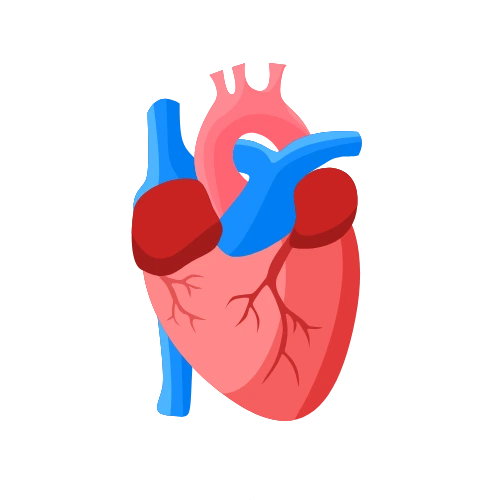
Left ventricular (LV) assessment is a cornerstone of echocardiography, providing critical information about cardiac structure and function. The LV Calculator computes key parameters from standard M-mode measurements: LV mass using the Devereux formula, LV mass index (LVMI) adjusted for body surface area, relative wall thickness (RWT), ejection fraction (EF) via the Teichholz method, fractional shortening (FS), and stroke volume. It then classifies the geometric pattern as normal, concentric remodeling, concentric hypertrophy, or eccentric hypertrophy based on ASE thresholds.
This tool is designed for cardiologists, sonographers, internal medicine physicians, and trainees who need rapid, accurate LV quantification. By entering a few measurements, you receive a complete LV profile with color-coded risk categories and a concise interpretation. The calculator supports both cm and mm units, and it automatically adjusts LVMI thresholds for sex.
How to Use the LV Calculator
Enter the patient’s age and select sex.
Input height and weight, choosing your preferred units (cm/in, kg/lbs).
Enter LVIDd (left ventricular internal dimension at end-diastole).
Enter LVIDs (left ventricular internal dimension at end-systole).
Input IVSd (interventricular septal thickness at end-diastole).
Input PWd (posterior wall thickness at end-diastole).
Verify the auto-calculated body surface area (BSA).
Click Calculate to view LV mass, LVMI, RWT, EF, FS, SV, EDV, and geometric pattern.
Use the quick example buttons to load normal, concentric remodeling, concentric hypertrophy, eccentric hypertrophy, or dilated cardiomyopathy profiles.
Review the Clinical Interpretation and the LV Geometric Patterns table for context.
How the LV Calculator Formula Works
The calculator uses validated echocardiographic formulas to derive LV parameters.
Body Surface Area (DuBois):
BSA = 0.007184 × Height(cm)^0.725 × Weight(kg)^0.425
LV Mass (Devereux):
LV Mass = 0.8 × 1.04 × [(LVIDd + IVSd + PWd)³ − LVIDd³] + 0.6
LV Mass Index:
LVMI = LV Mass ÷ BSA
Relative Wall Thickness:
RWT = (2 × PWd) ÷ LVIDd
End-Diastolic Volume (Teichholz):
EDV = (7 ÷ (2.4 + LVIDd)) × LVIDd³
End-Systolic Volume (Teichholz):
ESV = (7 ÷ (2.4 + LVIDs)) × LVIDs³
Stroke Volume:
SV = EDV − ESV
Ejection Fraction:
EF = ((EDV − ESV) ÷ EDV) × 100
Fractional Shortening:
FS = ((LVIDd − LVIDs) ÷ LVIDd) × 100
Geometric Pattern Classification:
Normal: LVMI ≤ threshold (115 g/m² men, 95 g/m² women) AND RWT ≤ 0.42
Concentric Remodeling: LVMI ≤ threshold AND RWT > 0.42
Concentric Hypertrophy: LVMI > threshold AND RWT > 0.42
Eccentric Hypertrophy: LVMI > threshold AND RWT ≤ 0.42
Worked Example
A 65-year-old man with hypertension undergoes echocardiography. Measurements: LVIDd 4.8 cm, LVIDs 3.2 cm, IVSd 1.5 cm, PWd 1.4 cm. Height 170 cm, weight 85 kg.
Step 1 – BSA:
BSA = 0.007184 × 170^0.725 × 85^0.425 = 1.98 m²
Step 2 – LV Mass:
LV Mass = 0.8 × 1.04 × [(4.8 + 1.5 + 1.4)³ − 4.8³] + 0.6 = 0.832 × [(7.7)³ − 110.6] + 0.6 ≈ 0.832 × (456.5 − 110.6) + 0.6 ≈ 288.4 g
Step 3 – LVMI:
LVMI = 288.4 ÷ 1.98 = 145.7 g/m²
Step 4 – RWT:
RWT = (2 × 1.4) ÷ 4.8 = 0.58
Step 5 – EF:
EDV = (7 ÷ (2.4 + 4.8)) × 4.8³ = 0.972 × 110.6 = 107.5 mL
ESV = (7 ÷ (2.4 + 3.2)) × 3.2³ = 1.25 × 32.8 = 41.0 mL
SV = 66.5 mL
EF = (66.5 ÷ 107.5) × 100 = 61.9%
Step 6 – Pattern: LVMI > 115 and RWT > 0.42 → Concentric Hypertrophy.
Interpretation: Concentric LV hypertrophy detected. This pattern is typically seen with pressure overload (hypertension, aortic stenosis). Aggressive management of the underlying cause is essential.
Frequently Asked Questions
What is the LV Calculator?
The LV Calculator is a tool that computes left ventricular mass, mass index, relative wall thickness, ejection fraction, fractional shortening, stroke volume, and geometric pattern from standard echocardiographic measurements.
What formulas does the LV Calculator use?
It uses the Devereux formula for LV mass, DuBois for BSA, Teichholz for volumes and EF, and standard equations for RWT and FS.
What is a normal LV mass index?
Normal LVMI is ≤ 115 g/m² for men and ≤ 95 g/m² for women. Higher values indicate LV hypertrophy.
What are the four LV geometric patterns?
Normal, concentric remodeling, concentric hypertrophy, and eccentric hypertrophy. They are defined by LVMI and RWT.
What does concentric hypertrophy mean?
Concentric hypertrophy means increased LVMI with increased RWT. It is typically caused by pressure overload such as hypertension or aortic stenosis.
What does eccentric hypertrophy mean?
Eccentric hypertrophy means increased LVMI with normal RWT. It is typically caused by volume overload such as mitral or aortic regurgitation, or dilated cardiomyopathy.
What is relative wall thickness?
RWT is (2 × PWd) / LVIDd. It reflects the ratio of wall thickness to cavity size. A value > 0.42 indicates increased wall thickness relative to cavity size.
Can the LV Calculator be used for children?
The formulas are validated for adults. Pediatric LV assessment requires age-specific normative data. This calculator is intended for adult use.
Is the LV Calculator free?
Yes, it is completely free and runs in your browser. No data is transmitted or stored.
What should I do if my LV pattern is abnormal?
Discuss the results with a healthcare provider. They can correlate the findings with your clinical picture and recommend further evaluation or treatment.