Introduction
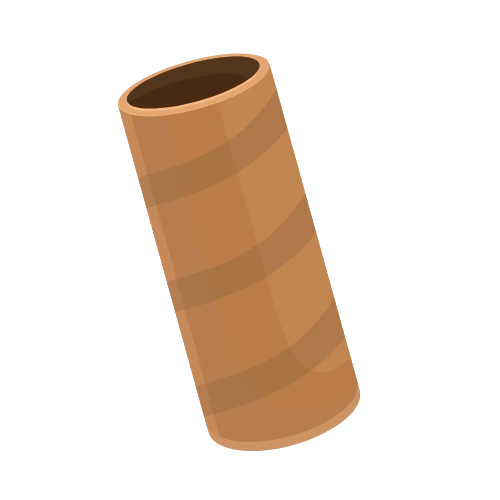
Pouring concrete footings, columns, or piers using sonotubes (cardboard concrete forms) requires precise volume calculations to avoid costly shortages or wasteful overages. This free Sonotube calculator does the math for you. Enter the diameter and height of your tube, select your units (inches, feet, or centimeters), and specify how many tubes you need. The tool instantly calculates the concrete volume per tube and total volume in cubic feet and cubic yards. It then applies a 10% overage factor (industry standard for spillage, waste, and settlement) and tells you exactly how many bags of concrete mix to buy based on your chosen bag size (40, 60, 80, or 90 lbs). Toolraxy provides this resource for DIY deck builders, fence installers, pole barn contractors, and anyone pouring concrete footings.
How to Use
Enter the Diameter of your sonotube (the width of the hole or form).
Select the Diameter Unit (inches, feet, or centimeters) from the dropdown.
Enter the Height/Depth of the sonotube (how deep the concrete will be poured).
Select the Height Unit (inches, feet, or centimeters).
Enter the Number of Tubes (how many identical columns or footings you are pouring).
Select your Concrete Bag Size (40, 60, 80, or 90 lbs) by clicking the appropriate button.
Optionally, enter a Price per Bag and Delivery Fee to get a total cost estimate.
The results update automatically as you change any input.
How the Tool Works
This calculator uses standard geometric formulas for cylinder volume, then converts to concrete bag requirements based on industry-standard yield rates.
Formula (Volume per Tube in Cubic Feet):
Volume per Tube (cu ft) = π × (Diameter ÷ 2)² × Height
Where Diameter and Height are first converted to feet, regardless of the input unit.
Conversion to Feet:
Bag Yield Rates (Cubic Feet per Bag):
40 lb bag → 0.30 cu ft
60 lb bag → 0.45 cu ft
80 lb bag → 0.60 cu ft
90 lb bag → 0.675 cu ft
Calculation Logic & Validation:
Volume Calculation: The tool calculates the volume of a cylinder (π × r² × h) for one tube, then multiplies by the number of tubes.
Overage Factor: A fixed 10% overage (× 1.10) is applied to the total volume to account for spillage, waste, and concrete settlement. This is industry standard practice.
Bags Needed: The total volume (including overage) is divided by the yield of the selected bag size. The result is rounded up to the nearest whole number using Math.ceil() because you cannot purchase a fraction of a bag.
Validation: If diameter or height is zero or negative, the calculator displays an error message in the main result field.
Cost Calculation: Total cost = (Bags Needed × Price per Bag) + Delivery Fee. If price per bag is zero, total cost displays as “— (enter price).”
Unit Conversion: All inputs are converted to feet internally for volume calculation, but the tool displays the original units you selected.
Worked Example
Let us walk through a typical deck footing project to see exactly how the Sonotube calculator works.
Scenario: You are building a deck that requires 6 concrete footings. Each footing will use a 12-inch diameter sonotube filled to a depth of 36 inches. You plan to use 80 lb bags of concrete mix, which cost $8.50 each at your local hardware store. Delivery is free (or you are picking them up yourself).
Step-by-Step Calculation:
Convert to Feet: Diameter = 12 inches ÷ 12 = 1.0 foot. Height = 36 inches ÷ 12 = 3.0 feet.
Radius: Diameter (1.0 ft) ÷ 2 = 0.5 feet.
Volume per Tube: π × (0.5)² × 3.0 = 3.1416 × 0.25 × 3.0 = 2.36 cubic feet.
Total Volume (6 tubes): 2.36 cu ft × 6 = 14.16 cubic feet (0.52 cubic yards).
Add 10% Overage: 14.16 cu ft × 1.10 = 15.58 cubic feet (accounting for spillage and waste).
Bag Yield: An 80 lb bag yields 0.60 cubic feet.
Bags Needed (raw): 15.58 cu ft ÷ 0.60 cu ft per bag = 25.96 bags.
Bags Needed (rounded up): 25.96 rounds up to 26 bags.
Total Cost: 26 bags × 8.50=∗∗8.50=∗∗221.00**.
Interpretation & Takeaway:
You need to purchase 26 bags of 80 lb concrete mix for this project. The calculator shows that the raw calculation was 25.96 bags, but because you must buy whole bags, you will have a small amount of leftover concrete (about 0.4 cu ft or 0.6 of a bag). This is normal and better than running short mid-pour. Using the 10% overage built into the calculator, your estimate already includes a safety margin for minor waste.
FAQs
How accurate is this sonotube calculator?
It is mathematically precise for cylinder volume calculations. The 10% overage is an industry standard. Actual bag yields may vary slightly by concrete mix brand, but the values used (0.30-0.675 cu ft per bag) are standard for general-purpose mixes.
Can I calculate sonotube volume manually instead?
Yes, using the cylinder volume formula. However, converting units and applying overage correctly requires multiple steps. This calculator automates that process and eliminates unit conversion errors.
What does the 10% overage factor represent?
It accounts for concrete spillage during mixing and pouring, concrete that sticks to tools, and settlement of the wet concrete in the tube. Without overage, you will almost certainly run short.
What size sonotube should I use for a deck footing?
Typical deck footings use 10-inch, 12-inch, or 14-inch diameter sonotubes, depending on deck height and local building codes. A 12-inch tube is most common for residential decks.
How deep should a sonotube footing be?
Depth is determined by your local frost line. In most climates, footings must extend 12-48 inches below grade, below the frost depth. Check local building codes for requirements.
Is this tool safe to use for professional construction estimating?
Yes, but treat it as an estimating tool, not a final engineering calculation. For critical structural applications, consult a structural engineer and verify all local building code requirements.
Why did the calculator round up my bags from 25.96 to 26?
Because you cannot buy 0.96 of a concrete bag. Rounding up ensures you have enough concrete. The small leftover (about 0.4 cu ft or 0.6 of a bag) is normal and preferable to running short.
What is the difference between a sonotube and a concrete form tube?
Sonotube is a brand name that has become generic, like Kleenex. All sonotubes are concrete form tubes, but not all concrete form tubes are Sonotube brand. The calculator works for any cylindrical cardboard concrete form.
Does this calculator work for metric units (centimeters)?
Yes. Select “cm” from the diameter and height unit dropdowns. The tool converts centimeters to feet internally for volume calculation, then displays results in cubic feet and cubic yards.
How much concrete does an 80 lb bag actually yield?
Approximately 0.6 cubic feet (0.022 cubic yards). This calculator uses that standard yield. For high-strength or lightweight mixes, yield may vary slightly—check your bag label.
Should I add more than 10% overage for large projects?
For very large pours (over 100 tubes), the percentage of waste typically decreases because proportionally less concrete is spilled. For small DIY projects (under 10 tubes), 10% is appropriate. This calculator uses a fixed 10% overage for simplicity and safety.
What if my sonotubes have different heights or diameters?
This calculator assumes all tubes are identical. For tubes with different dimensions, calculate each size separately and add the results, or use the most conservative (largest) tube size for all to ensure you have enough concrete.