
Calculate BMI, Body Fat Percentage & Health Risk Assessment
No calculation history yet. Try calculating your health metrics!











ADVERTISEMENT

Founder & CEO, Toolraxy
Faiq Ur Rahman is a web designer, digital product developer, and founder of Toolraxy, a growing platform of web-based calculators and utility tools. He specializes in building structured, user-friendly tools focused on health, finance, productivity, and everyday problem-solving.
User Ratings:
ADVERTISEMENT
An Overweight Calculator is a comprehensive health assessment tool that scientifically evaluates weight status, body composition, and associated health risks using multiple validated metrics. This sophisticated calculator applies medical-grade algorithms to calculate Body Mass Index (BMI), estimate body fat percentage, assess health risks, and provide personalized recommendations based on individual biometric data. By transforming simple measurements into detailed health insights, this specialized tool bridges the gap between basic weight tracking and professional medical assessment, offering evidence-based guidance for weight management and health optimization.
The primary purpose of an Overweight Calculator is to provide objective, data-driven insights into weight status and associated health implications. Whether monitoring personal health progress, initiating weight management strategies, assessing fitness goals, or identifying potential health concerns, understanding precise weight metrics prevents misconceptions and supports informed health decisions. Our advanced Overweight Calculator incorporates WHO-recommended BMI standards, age-adjusted body fat estimation, activity level considerations, gender-specific parameters, and comprehensive risk assessment to transform basic biometrics into actionable health intelligence.
Step 1: Input Your Biometric Data – Begin by entering your current weight and height using convenient unit toggles (kg/lbs for weight, cm/feet for height). For most accurate results, measure in the morning before eating, with minimal clothing.
Step 2: Specify Age and Gender – Enter your biological age and select your gender (male/female). These factors significantly affect BMI interpretation, body fat standards, and health risk assessment calculations.
Step 3: Assess Activity Level – Use the activity slider to indicate your typical physical activity level from Sedentary to Very Active. Physical activity modifies health risk calculations and influences weight management recommendations.
Step 4: Calculate Health Metrics – Click calculate to instantly generate comprehensive health assessment including: BMI score with category classification, estimated body fat percentage, health risk level, and ideal weight range for your height.
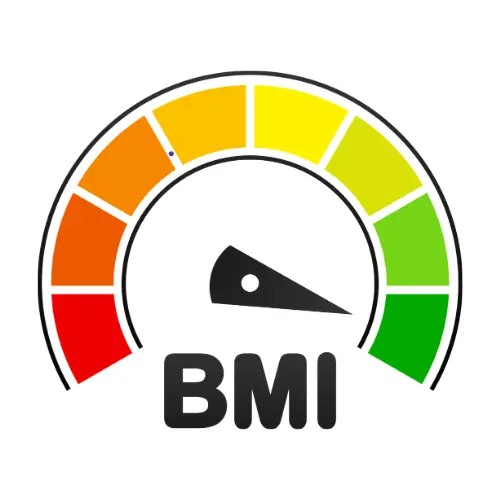
Step 5: Review Visual BMI Scale – Examine your BMI positioning on the color-coded scale showing underweight, normal, overweight, and obese categories with marker placement for instant visual understanding.
Step 6: Analyze Detailed Assessment – Review complete results including: BMI category description, body fat analysis relative to age/gender standards, specific health risks associated with your metrics, and personalized recommendations.
Step 7: Explore Additional Analyses – Use the tabs to access body fat category comparisons, specific health recommendations, and calculation history for tracking progress over time.
Step 8: Implement Recommendations – Utilize personalized guidance for diet, exercise, and lifestyle modifications tailored to your specific assessment results.
BMI Calculation with WHO Standards – Uses World Health Organization BMI classification: Underweight (<18.5), Normal (18.5-24.9), Overweight (25-29.9), Obese Class I (30-34.9), Obese Class II (35-39.9), Obese Class III (≥40)
Body Fat Percentage Estimation – Scientifically estimates body fat using validated formulas accounting for BMI, age, and gender differences in body composition
Health Risk Assessment – Evaluates risk for weight-related conditions including type 2 diabetes, hypertension, cardiovascular disease, and metabolic syndrome
Ideal Weight Range Calculation – Determines healthy weight range for your specific height based on BMI 18.5-24.9 standard
Age and Gender Adjustments – Applies appropriate standards for different age groups and accounts for physiological differences between male and female body composition
Activity Level Integration – Modifies risk assessment based on physical activity levels, recognizing exercise as a protective health factor
Visual BMI Scale – Color-coded graphical representation showing exactly where your BMI falls within standard categories
Personalized Recommendations – Provides specific, actionable advice for diet, exercise, and lifestyle modifications based on assessment results
Calculation History – Tracks progress over time with saved results for monitoring weight management journey
Medical Disclaimer – Includes appropriate warnings about calculator limitations and recommendation for professional medical consultation when needed
Underweight (BMI < 18.5) – May indicate nutritional deficiencies, increased risk of osteoporosis, impaired immune function. Common causes include inadequate calorie intake, medical conditions, or high metabolism.
Normal Weight (BMI 18.5-24.9) – Associated with lowest risk of weight-related health problems. Considered the healthiest weight range for most individuals, though body composition varies within this category.
Overweight (BMI 25-29.9) – Increased risk of developing health problems including type 2 diabetes, hypertension, dyslipidemia. Often indicates excess body fat but may include individuals with high muscle mass.
Obese Class I (BMI 30-34.9) – High risk of weight-related health complications. Medical intervention often recommended for weight reduction and risk factor management.
Obese Class II (BMI 35-39.9) – Very high risk of serious health complications. Typically requires comprehensive medical weight management including possible pharmacological intervention.
Obese Class III (BMI ≥ 40) – Extremely high risk of life-threatening health conditions. Often indicates need for aggressive medical intervention including possible bariatric surgery consideration.
Essential Fat – Minimum required for physiological function: 2-5% for men, 10-13% for women. Below these levels can impair health and physiological processes.
Athletes – Typical ranges for trained athletes: 6-13% for men, 14-20% for women. Varies by sport and training intensity.
Fitness – Good fitness levels: 14-17% for men, 21-24% for women. Associated with good health and physical condition.
Average – Typical population ranges: 18-24% for men, 25-31% for women. Higher end indicates increased health risks.
Obese – Increased health risk: ≥25% for men, ≥32% for women. Associated with elevated risk of metabolic and cardiovascular diseases.
Metabolic Risks – Insulin resistance, dyslipidemia, metabolic syndrome development probability based on BMI and body fat estimates
Cardiovascular Risks – Hypertension, coronary artery disease, stroke risk assessment using BMI categories and activity level adjustments
Musculoskeletal Risks – Osteoarthritis, back pain, mobility issues associated with excess weight and poor weight distribution
Psychological Factors – Depression, anxiety, body image issues often associated with weight concerns (not directly calculated but considered in recommendations)
Lifestyle Factors – Physical activity level, age-related metabolic changes, gender-specific risk patterns incorporated into overall assessment
BMI Limitations – BMI doesn’t distinguish between fat and muscle mass, may misclassify muscular individuals as overweight/obese
Estimation Nature – Body fat percentage is estimated, not measured; for precise body composition analysis, professional methods (DEXA, BIA, skinfold) are recommended
Individual Variation – Genetic factors, ethnicity, body frame size, and medical conditions affect ideal weight ranges beyond BMI calculations
Professional Consultation – Calculator provides screening and educational information but doesn’t replace professional medical assessment
Progress Tracking – Most valuable for monitoring changes over time rather than absolute classification at single time points
Personal Health Monitoring – Regular self-assessment for weight management and health maintenance
Fitness Goal Setting – Establishing realistic weight and body composition targets for exercise programs
Nutrition Planning – Informing dietary strategies based on weight status and health risk assessment
Medical Screening – Preliminary assessment before professional consultation for weight-related concerns
Educational Tool – Understanding relationship between weight, health risks, and lifestyle factors
Progress Tracking – Monitoring changes in BMI, estimated body fat, and health risk over time with historical data
BMI (Body Mass Index) is a calculated value using your weight and height (kg/m²) that provides a standardized measure of body fatness. It’s important because it’s widely used in healthcare to screen for weight categories that may lead to health problems. BMI correlates with body fat and health risks for most adults, though it has limitations for athletes and elderly individuals.
Our calculator provides clinically accurate BMI calculations and reasonable body fat estimations based on validated formulas. The BMI calculation is mathematically precise. Body fat percentage is estimated using age- and gender-adjusted formulas with approximately 85-90% accuracy for general population screening. For precise body composition analysis, professional methods like DEXA scans or hydrostatic weighing are recommended.
Yes, BMI can be misleading in certain situations:
Athletes/Muscle Mass: High muscle mass can elevate BMI into overweight/obese categories despite low body fat
Elderly Individuals: Age-related muscle loss can show normal BMI despite high body fat percentage
Ethnic Variations: Some ethnic groups have different body composition standards
Pregnancy: BMI calculations are not valid during pregnancy
Extreme Heights: BMI may be less accurate for very short or very tall individuals
Medically, “overweight” refers to BMI 25-29.9 (excess body weight that may or may not include excess fat), while “obesity” refers to BMI ≥30 (excess body fat that increases health risks). Obesity is further classified into Class I (30-34.9), Class II (35-39.9), and Class III (≥40) based on increasing health risks.
Not necessarily. Consider these factors:
Body Composition: You may have higher muscle mass than fat
Fitness Level: Regular exercise reduces health risks independent of BMI
Health Markers: Blood pressure, cholesterol, blood sugar may be normal
Waist Circumference: May be more important than BMI alone
Consult a healthcare provider for comprehensive assessment
Consider consulting a healthcare provider if:
BMI < 18.5 (underweight with unexplained weight loss)
BMI ≥ 30 (obesity category)
BMI 25-29.9 with additional risk factors (family history, high blood pressure, etc.)
Recent unexplained weight change (>5% body weight in 6-12 months)
You have concerns about your weight affecting health or quality of life
This overweight and health calculator provides estimates for educational and informational purposes only, based on general population averages and standard formulas that should not be considered medical advice. Individual health status, body composition, and risk factors can vary significantly based on genetics, muscle mass, bone density, hydration, medical conditions, and medications that this calculator cannot account for. This tool is not intended to diagnose, treat, cure, or prevent any disease or medical condition, and should not be used as a substitute for professional medical advice, diagnosis, or treatment. BMI and body fat estimates in clinical settings use precise methods that are far more accurate than any formula-based estimate. If you have concerns about your weight, body composition, or associated health risks, or if you experience symptoms such as unexplained weight changes, fatigue, or other health concerns, please consult a qualified healthcare professional before making any significant changes to your diet, exercise routine, or lifestyle. Always seek the advice of your physician or other qualified health provider with any questions you may have regarding a medical condition.
ADVERTISEMENT
ADVERTISEMENT