

Calculate weight of steel beams, channels, angles, plates and tubes based on dimensions










ADVERTISEMENT

Founder & CEO, Toolraxy
Faiq Ur Rahman is a web designer, digital product developer, and founder of Toolraxy, a growing platform of web-based calculators and utility tools. He specializes in building structured, user-friendly tools focused on health, finance, productivity, and everyday problem-solving.
User Ratings:
ADVERTISEMENT
ADVERTISEMENT
A steel weight calculator is an essential engineering and construction tool that precisely calculates the weight of steel materials for various shapes and applications. This specialized calculator automates complex mathematical calculations that account for dimensions, cross-sectional shapes, steel grades, and material densities. Modern steel weight calculators have evolved from manual tables and formulas to sophisticated web applications that provide instant, professional-grade results for engineers, fabricators, construction managers, and procurement specialists.
The primary purpose of a steel weight calculator is to eliminate estimation errors in material planning, procurement, and cost estimation. Whether calculating reinforcement bars for concrete structures, steel plates for fabrication, or structural sections for building frameworks, knowing exact material weights prevents costly over-ordering that wastes resources or dangerous under-ordering that causes project delays and structural compromises. Our advanced steel weight calculator incorporates international standards (ASTM, BS, IS, DIN), accounts for different steel grades and compositions, adjusts for various measurement systems, and provides comprehensive weight breakdowns that transform complex engineering calculations into simple, accurate results.
Step 1: Select Your Steel Shape – Begin by identifying your steel material shape. Our calculator offers three main calculation modes: Bars/Rods Calculator for round, square, and hexagonal reinforcement bars; Plates/Sheets Calculator for flat steel plates, sheets, and coils; and Structural Calculator for I-beams, channels, angles, pipes, tubes, and other structural sections. Each mode has specialized input fields and calculation methods tailored to that specific steel shape.
Step 2: Input Your Dimensions – Carefully measure and enter your steel dimensions. For bars: diameter and length. For plates: length, width, and thickness. For structural sections: multiple dimensions depending on the section type (width, height, thickness, flange dimensions). Our calculator accepts multiple measurement units including millimeters, inches, centimeters, feet, and meters, with automatic conversion between systems.
Step 3: Specify Steel Type and Grade – Select from six steel types: Mild Steel (most common construction steel), TMT Steel (thermo-mechanically treated for reinforcement), Stainless Steel (corrosion resistant), Alloy Steel (special properties), Carbon Steel (higher carbon content), and Tool Steel (hardened for tools). Choose the appropriate steel grade: Fe250, Fe415, Fe500, Fe550, or Fe600, with higher numbers indicating greater yield strength.
Step 4: Configure Quantity and Units – Specify the quantity of pieces for bars or number of plates/sheets. Select your preferred measurement units for both dimensions and weight output. Our calculator supports kilograms, pounds, metric tons, and US tons for weight output, allowing seamless conversion between different measurement systems used in various regions and industries.
Step 5: Use Quick Selection Tools – Utilize our quick-select buttons for standard sizes: 8mm, 10mm, 12mm, 16mm, 20mm, 25mm, 32mm, and 40mm for bars; 3mm, 6mm, 10mm, 12mm, 16mm, and 20mm for plates; and standard structural sections like UB 203×133, UB 254×146, and UB 305×165 universal beams. These shortcuts instantly populate dimensions with standard industry sizes.
Step 6: Review and Apply Results – The calculator instantly displays total weight, unit weight per meter/length, steel volume, and estimated cost based on current steel prices. These comprehensive results include all adjustments for steel type, grade, and dimensions. Use these figures for material procurement, load calculations, transportation planning, cost estimation, and project scheduling with confidence in their engineering accuracy.
Different steel types and grades serve distinct structural purposes and have specific mechanical properties that affect weight calculations and structural applications. Our calculator accounts for these variations through precise density values and calculation methods.
Mild Steel (Fe250) – The most common construction steel with 250 MPa minimum yield strength and density of 7850 kg/m³. Mild steel offers excellent weldability, formability, and cost-effectiveness for general construction, fabrication, and non-critical structural applications. Its predictable properties and widespread availability make it the default choice for most construction weight calculations.
TMT Steel (Fe415, Fe500, Fe550, Fe600) – Thermo-mechanically treated reinforcement bars with enhanced yield strengths (415-600 MPa) achieved through rapid quenching and tempering. TMT bars have superior ductility, bendability, and earthquake resistance compared to traditional reinforcement steel. While having the same density as mild steel (7850 kg/m³), their higher strength allows reduced quantities for equivalent load capacity.
Stainless Steel (304, 316) – Corrosion-resistant steel containing chromium (minimum 10.5%) and often nickel. With density around 8000 kg/m³ (slightly higher than mild steel), stainless steel offers excellent corrosion resistance, hygiene properties, and aesthetic appeal but at significantly higher cost. Common grades include 304 (general purpose) and 316 (marine/chemical resistance).
Alloy Steels – Steel with additional alloying elements (chromium, nickel, molybdenum, vanadium) to enhance specific properties like hardness, toughness, or wear resistance. Densities vary (typically 7700-8000 kg/m³) based on alloy composition. Used in specialized applications requiring specific mechanical properties beyond standard construction steel capabilities.
Carbon Steels – Steel with higher carbon content (0.12-2.0%) for increased hardness and strength but reduced ductility. Density remains approximately 7850 kg/m³, but mechanical properties vary significantly with carbon content. Used in tools, machinery, and applications requiring hardness rather than formability.
Steel Grade Designations – Steel grades indicate minimum yield strength: Fe250 = 250 MPa, Fe415 = 415 MPa, Fe500 = 500 MPa, etc. Higher grades provide greater strength but may have reduced ductility. Our calculator adjusts for slight density variations between grades while primarily focusing on the significant strength differences that affect structural design rather than weight calculation.
The mathematics behind steel weight calculations follows established engineering principles that our calculator automates with precision. The fundamental formula: Weight = Volume × Density, where density of mild steel is 7850 kg/m³ (0.284 lb/in³, 490 lb/ft³).
Round Bar Calculation – For circular cross-sections: Cross-sectional Area = π × (Diameter/2)². Volume = Area × Length. Weight = Volume × Density. Simplified formula for metric: Weight per meter (kg/m) = (Diameter in mm)² / 162. For imperial: Weight per foot (lb/ft) = (Diameter in inches)² × 2.67. Our calculator uses the exact formula but provides the simplified version for quick reference.
Square/Rectangular Bar Calculation – For square or rectangular cross-sections: Cross-sectional Area = Width × Height. Volume = Area × Length. Weight = Volume × Density. Simplified formula: Weight per meter (kg/m) = (Width × Height) × 0.00785 (for mm dimensions).
Flat Plate/Sheet Calculation – For flat plates: Volume = Length × Width × Thickness. Weight = Volume × Density. Simplified formula: Weight (kg) = Length (mm) × Width (mm) × Thickness (mm) × 0.00000785. For feet and pounds: Weight (lb) = Length (ft) × Width (ft) × Thickness (in) × 40.8.
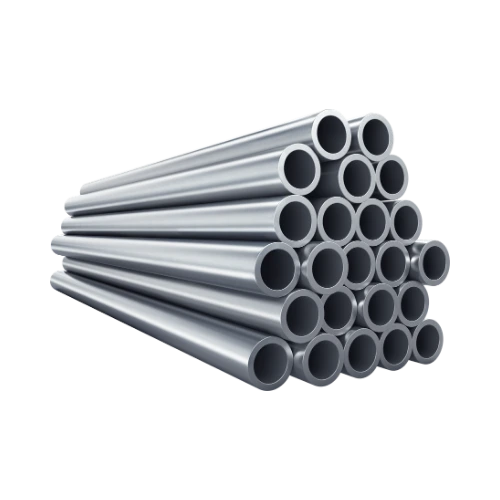
Pipe/Tube Calculation – For hollow circular sections: Cross-sectional Area = π × (Outer Radius² – Inner Radius²). Volume = Area × Length. Weight = Volume × Density. Simplified formula: Weight per meter (kg/m) = (Outer Diameter² – Inner Diameter²) × 0.006165.
Structural Section Calculation – Complex sections (I-beams, channels, angles) require summing multiple rectangular areas or using standard weight tables. Our calculator uses geometric decomposition: Total Area = Sum of all rectangular areas making up the cross-section. Volume = Total Area × Length. Weight = Volume × Density.
Unit Conversion Mathematics – Our calculator handles complex unit conversions: 1 mm = 0.03937 inches, 1 inch = 25.4 mm, 1 kg = 2.20462 lb, 1 metric ton = 1000 kg = 2204.62 lb, 1 US ton = 2000 lb = 907.185 kg. Density conversions: 7850 kg/m³ = 0.2836 lb/in³ = 490 lb/ft³. These conversions ensure accurate results regardless of the unit system used for input or output.
Reinforcement Bar (Rebar) Calculations – Reinforcement steel for concrete structures typically uses deformed bars (rebars) in diameters from 6mm to 40mm. Standard lengths are 6m or 12m. Weight calculation must account for bend geometries, lap lengths, and development lengths in structural designs. Our calculator provides per-bar weights that can be multiplied by the total number of bars required, with standard bend allowance factors for hooks and overlaps.
Structural Steel Framing Calculations – Building frames use I-beams (universal beams/columns), channels, angles, and hollow sections. These require precise weight calculations for structural analysis, foundation design, and erection planning. Our calculator includes standard section sizes with their theoretical weights, accounting for the complex geometries of flanges and webs in structural sections.
Steel Plate Fabrication Calculations – Fabrication shops calculate plate weights for material ordering, cutting optimization, and cost estimation. Plates range from thin sheets (1-3mm) to heavy plates (25-100mm+). Our calculator accounts for different plate types: flat plates, chequer plates (increased weight due to raised pattern), perforated sheets (reduced weight due to holes), and expanded metal (significantly reduced weight).
Pipe and Tubing Calculations – Pipes (circular hollow sections) and tubes (square/rectangular hollow sections) require calculations accounting for wall thickness. Schedule designations (Schedule 40, 80, etc.) indicate wall thickness relative to pipe diameter. Our calculator handles both circular and rectangular hollow sections with precise wall thickness calculations.
Wire and Rod Calculations – Smaller diameter steel (under 6mm) typically supplied in coils rather than straight lengths. Weight calculations must account for coil dimensions and potential material stretch during drawing processes. While our calculator focuses on straight lengths, it can estimate coil weights by calculating total length based on coil dimensions.
Specialty Steel Calculations – Special applications like shipbuilding (plate curvatures), pressure vessels (thick plates with curvature), and bridge construction (complex sections) may require additional calculation factors. Our calculator provides baseline weights that can be adjusted with engineering factors for specific applications.
Steel weight calculation technology continues evolving with advancements in materials science, digital engineering, and construction methodology.
BIM Integration – Direct integration with Building Information Modeling (BIM) software for automatic quantity takeoff from 3D models. This eliminates manual measurement and reduces errors in complex projects with numerous steel components.
Real-Time Price Integration – Connection to live commodity markets for real-time steel pricing. This enables dynamic cost estimation that reflects current market conditions rather than historical averages.
AI-Powered Optimization – Artificial intelligence algorithms that suggest material optimization based on: Structural requirements, Available stock sizes, Fabrication constraints, Cost parameters. AI can identify weight-saving opportunities human planners might miss.
Mobile and Field Applications – Mobile apps with camera-based dimension capture, barcode scanning for material identification, and offline functionality for job site use. This brings calculation capabilities directly to where materials are measured and installed.
Sustainability Metrics – Calculation of environmental impacts: Carbon footprint based on weight, Recycled content tracking, Lifecycle assessment integration. As sustainability becomes increasingly important, weight calculations will incorporate environmental metrics.
Augmented Reality Integration – AR visualization of steel components with weight data overlaid on actual structures. This helps with installation planning, clash detection, and as-built verification.
A steel weight calculator is an essential tool for engineers, construction professionals, fabricators, and procurement specialists to accurately determine the weight of steel materials. You need it to:
Estimate material costs accurately for budgeting and procurement
Calculate structural loads for engineering design
Plan transportation and handling requirements
Optimize material usage and minimize waste
Ensure compliance with weight limits and safety regulations
Prepare accurate bills of materials for projects
Yes! Our calculator supports multiple steel types:
Mild Steel (Fe250) – Standard construction steel, density 7850 kg/m³
TMT Steel (Fe415, Fe500, Fe550, Fe600) – Reinforcement bars with higher strength
Stainless Steel (304, 316) – Corrosion-resistant, density ~8000 kg/m³
Alloy Steel – Special properties, density ~7700-8000 kg/m³
Carbon Steel – Higher hardness, density ~7850 kg/m³
Tool Steel – Hardened applications, density ~7800 kg/m³
The fundamental formula is: Weight = Volume × Density
Specific formulas for common shapes:
Round Bars: Weight = (π × D²/4 × L) × Density
Simplified: Weight per meter (kg/m) = D² ÷ 162 (D in mm)
Flat Plates: Weight = (Length × Width × Thickness) × Density
Simplified: Weight (kg) = L×W×T × 0.00000785 (dimensions in mm)
Square/Rectangular Bars: Weight = (Width × Height × Length) × Density
Pipes/Tubes: Weight = [(π × (OD² – ID²)/4] × L × Density
Simplified: Weight per meter (kg/m) = (OD² – ID²) × 0.006165
ADVERTISEMENT
ADVERTISEMENT