
Calculate the work done by a force from force, displacement and angle — in J, kJ, ft-lbs, cal and more
| Energy range | Scale | Examples |
|---|
| Action / source | Work | Category | Notes |
|---|

Founder & CEO, Toolraxy
Faiq Ur Rahman is a web designer, digital product developer, and founder of Toolraxy, a growing platform of web-based calculators and utility tools. He specializes in building structured, user-friendly tools focused on health, finance, productivity, and everyday problem-solving.
User Ratings:
ADVERTISEMENT
ADVERTISEMENT
This work calculator takes force, displacement, and the angle between them, then returns the work done in joules, kilojoules, foot-pounds, and calories. It also computes power if you provide a time. Pick a preset like pushing a cart or lifting a box, or enter your own values. Results update as you type. No sign-up, and the math stays in your browser.
Work is energy transferred when a force moves an object. A crane lifting a beam, a person climbing stairs, a car engine pushing a piston: all of these do work. This calculator runs the standard physics formula W = F × d × cos(θ). It handles force in newtons, kilonewtons, pounds-force, kilograms-force, and dynes. Displacement can be meters, centimeters, millimeters, kilometers, feet, inches, or miles. The angle input lets you model pushes, pulls, and braking. An optional time field returns power in watts. Eight presets cover everyday examples from lifting an apple to a crane lift.
Pick a preset from the dropdown, or leave it on Custom / manual input.
Enter the force. Choose N, kN, lbf, kgf, or dyn.
Type the displacement. Units include m, cm, mm, km, ft, in, and mi.
Set the angle between force and motion in degrees. Use 0° for a push along the motion.
Add a time value if you want power output. Units are seconds, minutes, or hours.
Watch the hero number update as you type.
Read the four tiles for kilojoules, foot-pounds, calories, and power.
Compare your result against the work scale and reference table.
Work equals force times displacement times the cosine of the angle between them. That’s the full formula for a constant force acting on an object that moves in a straight line.
Formula: W = F × d × cos(θ)
Formula: P = W ÷ t
W is work in joules. F is force in newtons. d is displacement in meters. θ is the angle between the force vector and the displacement vector. P is power in watts, and t is time in seconds.
The cosine term is what makes the angle matter. At 0°, cos(0) = 1, so the full force does work. At 90°, cos(90) = 0, so no work is done. At 180°, cos(180) = −1, so the work is negative, meaning the force removes energy from the object.
The calculator converts every force unit to newtons and every distance unit to meters before multiplying. Time converts to seconds for the power tile. If force or distance is negative, the tool shows a warning. Zero is allowed and returns zero work. The angle can be any value from −360 to 360 degrees.
Load the sled preset. Force is 100 N. Displacement is 20 m. Angle is 30°.
Step 1: Convert the angle to radians. 30° × π ÷ 180 = 0.5236 rad.
Step 2: Find the cosine. cos(0.5236) = 0.8660.
Step 3: Multiply force by displacement. 100 × 20 = 2,000.
Step 4: Multiply by the cosine. 2,000 × 0.8660 = 1,732 J.
The calculator reports 1,732 J, which is 1.732 kJ or about 1,277 ft-lbs. Power with a 1-second time is 1,732 W. The class banner labels this “High” work. Pulling a sled at an angle wastes some effort. If the rope were horizontal (0°), the same force over the same distance would do 2,000 J. The 30° angle costs you about 13% of the work.
Work is the energy transferred when a force moves an object. It equals force times displacement times the cosine of the angle between them. The unit is the joule.
Multiply force in newtons by displacement in meters by the cosine of the angle. A 100 N force over 5 m at 0° gives 500 J. At 60°, it gives 250 J.
A joule is the work done when one newton moves an object one meter. Lifting a small apple one meter does about one joule. A heartbeat does about one joule.
Only the force component along the motion does work. The cosine term extracts that component. At 0°, full force counts. At 90°, none counts. At 180°, work is negative.
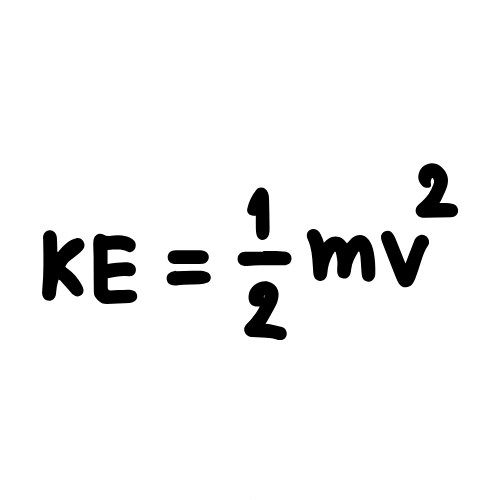
Work is the transfer of energy. Energy is the capacity to do work. Both are measured in joules. The work-energy theorem says net work equals the change in kinetic energy.
Negative work happens when the force opposes the motion. Friction and braking do negative work. The object loses energy. Angles above 90° produce negative work in the calculator.
Yes. Work is zero if force is zero, displacement is zero, or the angle is 90°. Holding a heavy box stationary does no work in the physics sense.
Divide the work in joules by 1.3558. A 1,000 J result equals about 738 ft-lbs. The calculator shows foot-pounds automatically.
Force supports N, kN, lbf, kgf, and dyn. Distance supports m, cm, mm, km, ft, in, and mi. Time supports s, min, and h. Output is in J, kJ, ft-lbs, cal, and W.
The force is 98.1 N, the distance is 1 m, and the angle is 0°. Work equals 98.1 J. That’s the calculator’s preset for this scenario.
The work-energy theorem states that the net work done on an object equals its change in kinetic energy. Positive work speeds it up. Negative work slows it down.
Forgetting unit conversions, using the wrong angle, and assuming work is always positive. Also, don’t confuse work with power. Work is energy; power is energy per time.
ADVERTISEMENT
ADVERTISEMENT