Introduction
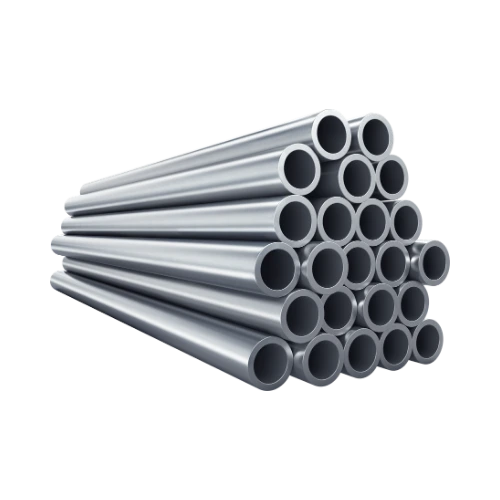
Piping is everywhere, from residential plumbing to industrial oil and gas lines but estimating pipe weight manually is tedious and error-prone. This pipe weight calculator helps engineers, plumbers, and DIYers quickly determine the weight of hollow pipes across seven common materials: steel, stainless steel, aluminum, copper, brass, PVC, and HDPE. Simply enter the outer diameter, wall thickness, length, and quantity, then get instant results for weight per meter, weight per piece, and total weight in kilograms and pounds. Toolraxy designed this calculator to help you plan shipping logistics, structural loads, and material budgets with confidence, whether you are working with metal pipes for a handrail or plastic pipes for irrigation.
How to Use
Select Material: Choose from Steel, Stainless Steel, Aluminum, Copper, Brass, PVC, or HDPE.
Enter Outer Diameter: Input the pipe’s outside diameter (mm, cm, or inches).
Enter Wall Thickness: Input the pipe wall thickness (mm, cm, or inches).
Enter Length: Input the pipe length (meters, feet, or cm).
Set Quantity: Enter the number of identical pipes.
Click “Calculate” or Edit Any Field: Results update automatically.
How the Tool Works
This calculator determines the weight of a hollow pipe by calculating the volume of the pipe wall material and multiplying by the material’s density.
Formula:
Weight = Cross-sectional Area of Pipe Wall × Length × Density
Mathematical Structure:
Inner Diameter (ID): ID = Outer Diameter − (2 × Wall Thickness)
Cross-sectional Area of Pipe Wall: Area = π × [(OD / 2)² − (ID / 2)²]
Volume: Volume = Area × Length
Weight per Piece: Weight = Volume × Density
Weight per Meter: Area × 1 × Density
Total Weight: Weight per Piece × Quantity
Calculation Logic:
Standardize Inputs: All dimension values convert to meters (base unit).
mm → m: ÷ 1000
cm → m: ÷ 100
inches → m: × 0.0254
feet → m: × 0.3048
Validate Dimensions: Check that Inner Diameter > 0 (wall thickness cannot exceed half the outer diameter).
Calculate Cross-sectional Area: Subtract the hollow inner circle area from the outer circle area.
Calculate Volume: Multiply area by length.
Apply Density: Multiply volume by material density (kg/m³).
Convert Outputs: kg to lbs (× 2.20462).
Validation Behavior:
Dimensions below minimum values (0.1) show a warning message.
Wall thickness greater than half the outer diameter shows “Wall too thick for diameter.”
Negative or non-numeric entries default to 0.
Zero quantity defaults to 1 piece.
Edge Cases:
Mixed Units: Enter outer diameter in inches, wall thickness in mm, and length in feet—all convert correctly to meters.
Very Thin Walls: Works for any positive wall thickness down to 0.1 mm.
Non-metallic Materials: PVC (1,400 kg/m³) and HDPE (960 kg/m³) are included for plastic pipe applications.
Worked Example
Scenario: A contractor needs to estimate the weight of 20 stainless steel pipes for a handrail system.
Material: Stainless Steel (Density: 8,000 kg/m³)
Outer Diameter: 50 mm (0.05 m)
Wall Thickness: 2.5 mm (0.0025 m)
Length: 4 meters
Quantity: 20 pipes
Step-by-Step Calculation:
Inner Diameter: 0.05 m − (2 × 0.0025 m) = 0.045 m
Outer Radius Squared: (0.05 / 2)² = 0.025² = 0.000625 m²
Inner Radius Squared: (0.045 / 2)² = 0.0225² = 0.00050625 m²
Cross-sectional Area: π × (0.000625 − 0.00050625) = π × 0.00011875 = 0.000373 m²
Volume per Pipe: 0.000373 m² × 4 m = 0.001492 m³
Weight per Pipe: 0.001492 m³ × 8,000 kg/m³ = 11.94 kg
Total Weight: 11.94 kg × 20 pipes = 238.8 kg (526 lbs)
Interpretation & Takeaway:
The total order weighs approximately 239 kg (526 lbs), which is manageable for a standard pallet but would require a two-person lift or hand truck for manual handling. The contractor should arrange for a delivery truck with a lift gate.
What Is the Density of Common Pipe Materials?
Carbon Steel: 7,850 kg/m³ | 0.284 lbs/in³ (most common for structural and industrial piping)
Stainless Steel: 8,000 kg/m³ | 0.289 lbs/in³ (slightly heavier, corrosion-resistant)
Copper: 8,940 kg/m³ | 0.323 lbs/in³ (heavy, used for plumbing and refrigeration)
Brass: 8,500 kg/m³ | 0.307 lbs/in³ (heavy, decorative and low-friction applications)
Aluminum: 2,700 kg/m³ | 0.098 lbs/in³ (lightweight, corrosion-resistant)
PVC (Polyvinyl Chloride): 1,400 kg/m³ | 0.051 lbs/in³ (lightweight plastic for drainage and irrigation)
HDPE (High-Density Polyethylene): 960 kg/m³ | 0.035 lbs/in³ (very lightweight, flexible, for water and gas)
What Factors Affect Pipe Weight?
Material Density: The primary factor. A steel pipe weighs nearly 8 times more than an HDPE pipe of the same dimensions.
Wall Thickness (Schedule): Thicker walls (higher schedule number) significantly increase weight. A Schedule 80 pipe weighs about 50% more than Schedule 40.
Outer Diameter: Weight scales with the square of the diameter (double the OD = quadruple the weight for the same wall thickness).
Length: Weight scales linearly with length (double the length = double the weight).
Manufacturing Tolerances: Actual OD and wall thickness may vary by ±5-10% from nominal values.
Coatings and Linings: Galvanization (zinc coating) or epoxy linings add 1-5% to total weight.
Why Is My Calculated Pipe Weight Different from the Supplier’s?
If your calculated weight differs from a supplier’s specification, possible reasons include:
Nominal vs. Actual Dimensions: Many pipes are sold by nominal size (e.g., 2-inch pipe) but have slightly different actual OD and wall thickness.
Schedule Designation: Pipe schedules (Sch 40, Sch 80) have fixed wall thickness standards. Your manual measurement or assumption may differ.
Material Grade: Different steel grades (A53, A106) have slightly different densities.
Pipe vs. Tube: Pipes are measured by nominal ID; tubes are measured by exact OD. This calculator expects exact OD input.
Mill Tolerance: ASTM standards allow wall thickness variations of ±10-12.5%.
Common Mistakes When Calculating Pipe Weight
Forgetting the Pipe is Hollow: Using solid cylinder formula (π × r² × L) overestimates weight by 20-70%.
Unit Confusion: Entering 50 as mm but treating it as cm (0.5 m vs 0.05 m), leading to 100× weight error.
Incorrect Wall Subtraction: Using wall thickness directly as radius reduction (OD − wt instead of OD − 2×wt).
Mixing Inner and Outer Radii: Forgetting to square the radii in the area formula (π × R², not π × R × 2).
Using Wrong Density: Aluminum is 2,700, not 7,850 (a 3× error in the wrong direction).
Ignoring Quantity: Calculating one pipe but ordering 100.
Real-World Example Scenario: Pipe Rack Loading
Problem: An engineer is designing a pipe rack that must support 40 carbon steel pipes. Each pipe has an OD of 6 inches (0.1524 m), wall thickness of 0.25 inches (0.00635 m), and length of 20 feet (6.096 m). What is the total weight the rack must support?
Calculation using logic:
OD = 6 in × 0.0254 = 0.1524 m. Outer radius = 0.0762 m.
ID = 6 in − (2 × 0.25 in) = 5.5 in × 0.0254 = 0.1397 m. Inner radius = 0.06985 m.
Area = π × (0.0762² − 0.06985²) = π × (0.005806 − 0.004879) = π × 0.000927 = 0.002912 m².
Volume per pipe = 0.002912 m² × 6.096 m = 0.01775 m³.
Weight per pipe = 0.01775 × 7,850 (steel) = 139.4 kg.
Total weight = 139.4 kg × 40 pipes = 5,576 kg (12,292 lbs or 6.14 tons).
Result: The pipe rack must support over 5.5 metric tons of static load, requiring reinforced structural steel and appropriate foundation design.
FAQs
How accurate is this pipe weight calculator?
It is mathematically exact based on your inputs. Actual weights vary by manufacturing tolerances (±5-12% for wall thickness) and exact alloy composition.
Can I calculate pipe weight manually without a calculator?
Yes. Volume = π × (R_outer² − R_inner²) × Length. Then multiply by density (kg/m³) for weight in kg.
What is the difference between pipe and tube weight calculation?
Pipes are typically measured by nominal ID and schedule; tubes by exact OD. This calculator uses exact OD and wall thickness inputs, suitable for both when exact dimensions are known.
Why does my pipe weight show an error for wall thickness?
Wall thickness cannot exceed half the outer diameter (otherwise there is no hollow space). Reduce wall thickness or increase outer diameter.
Does this tool work for metric and imperial units?
Yes. Each dimension has independent unit selectors (mm, cm, in for diameter; m, ft, cm for length).
What is weight per meter and why is it useful?
Weight per meter helps estimate long continuous piping runs without entering total length every time. Multiply weight/m by total project length.
Is PVC pipe weight significantly different from steel pipe?
Yes. PVC density (1,400 kg/m³) is about 1/5.6 of steel (7,850). A PVC pipe of the same dimensions weighs approximately 18% of the steel pipe weight.
Can I use this for schedule 40 and schedule 80 pipes?
Yes. Look up the exact OD and wall thickness for your schedule and pipe size, then enter those values directly.
What is the heaviest pipe material in this calculator?
Copper (8,940 kg/m³), followed by brass (8,500) and stainless steel (8,000). Carbon steel is 7,850.
Does this account for pipe contents like water or gas?
No. This calculates empty pipe weight only. For filled pipes, add fluid weight (water = 1,000 kg/m³ × internal volume).
Disclaimer
This pipe weight calculator provides theoretical estimates based on standard material densities and nominal dimensions. Actual pipe weights vary due to manufacturing tolerances (ASTM/ASME allowances), material grade variations, surface coatings, and temperature effects. For critical applications including structural engineering, crane lifts, or pipeline design always verify with certified mill test reports and physical weighing. Toolraxy assumes no liability for errors, structural failures, or cost miscalculations resulting from the use of this tool.