Introduction
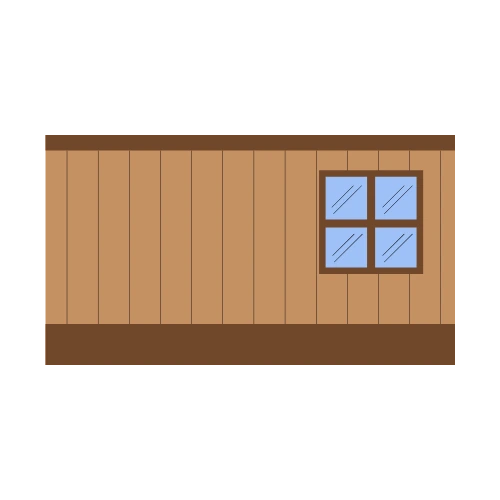
Planning a board and batten wall treatment is an exciting way to add architectural character to any room. But getting the layout wrong means uneven gaps, awkward end panels, and wasted materials. This board and batten calculator takes the guesswork out of your DIY project by computing exactly how many vertical battens you need and precisely where they should go.
Whether you’re a weekend warrior tackling an accent wall, a contractor estimating materials for a client, or an interior designer finalizing a spec, this tool gives you instant, accurate spacing calculations. Simply enter your wall width, batten width, and your desired gap, the calculator handles the rest, converting between inches, feet, centimeters, and millimeters. No more math errors or frustrating trial and error.
Quick Steps: How to Use
Enter your wall width – Measure the total horizontal span of the wall you’re treating
Optionally add wall height – For material estimating (visual reference only)
Input your batten width – The actual width of the boards you plan to install
Set your desired spacing – The approximate gap you want between battens
Select your units – Mix and match inches, feet, cm, mm, or meters
Click Calculate – Results appear instantly
Copy or share – Save your layout numbers for the hardware store
How the Tool Works
The calculator solves a classic layout problem: given a fixed wall width, battens of a certain thickness, and a target gap size, what’s the optimal number of battens and the exact resulting gap?
Formula:
Raw Number of Battens = (Wall Width – Desired Gap) ÷ (Batten Width + Desired Gap)
n = ROUND(raw number to nearest whole integer, minimum 1)
Exact Gap = (Wall Width - n × Batten Width) ÷ (n + 1)
End Gap = Exact Gap (same on both sides)
Total Batten Width Used = n × Batten Width
Calculation Logic:
All inputs convert to inches internally for consistent math
The formula solves for n (number of battens) based on your desired spacing
The result rounds to the nearest whole batten count
With n fixed, the calculator solves backward to find the exact gap that makes everything fit perfectly
End gaps equal the internal gap—this creates symmetrical, balanced layouts
Validation & Edge Cases:
If any input is zero or negative, the calculator shows an error message
If batten width equals or exceeds wall width, you’ll see “Batten too wide for wall”
Minimum battens is always 1 (even if the formula suggests zero)
Fractions display in inches with simplified sixteenths (e.g., 2 3/8″)
Worked Example
Scenario: Sarah is installing a board and batten feature wall in her dining room. She measures her wall at 120 inches wide. She bought 3-inch wide battens and wants gaps around 16 inches.
Step 1 – Enter the numbers:
Step 2 – The math:
n = (120 – 16) ÷ (3 + 16) = 104 ÷ 19 = 5.47
Round to nearest whole = 5 battens
Exact Gap = (120 - 5×3) ÷ (5+1) = (120 - 15) ÷ 6 = 105 ÷ 6 = 17.5 inches
Step 3 – The result:
Number of Battens: 5
Exact Gap: 17.5 inches (17 1/2″)
End Gaps: 17.5 inches each side
Total Batten Width Used: 15 inches
Takeaway: Sarah needs 5 battens with 17.5-inch gaps. Her desired spacing was 16 inches, but the optimal layout uses 17.5 inches—a small trade-off for perfect symmetry. She can now buy her materials with confidence.
Common Mistakes When Calculating Board and Batten
Forgetting end gaps is the number one error. DIYers often calculate as if battens start and end at the wall edges, leaving zero space at the ends. This creates an unbalanced look with wider gaps at the ends than between battens. Mixing measurement units without converting causes massive errors—entering wall width in feet and batten width in inches produces nonsense results. Rounding incorrectly or too early in the calculation chain compounds errors. Ignoring actual batten thickness (using nominal lumber sizes instead of measuring) leads to gaps that don’t match your calculation. Assuming desired gap equals achievable gap without running the formula first often results in disappointment and recutting.
Real-World Example Scenario: Living Room Accent Wall
James has a living room accent wall that measures 162 inches wide. He wants a modern farmhouse look with 4-inch wide battens and gaps around 18 inches. Running the calculator: desired gap 18 inches yields a raw n of (162-18)/(4+18)=144/22=6.54, rounding to 7 battens. The exact gap becomes (162-28)/(8)=134/8=16.75 inches. That’s a 1.25-inch difference from his desired 18 inches. James decides to try a 3.5-inch batten instead. With the same 18-inch desired gap: (162-18)/(3.5+18)=144/21.5=6.69, still 7 battens. Exact gap: (162-24.5)/(8)=137.5/8=17.1875 inches. Much closer. He can live with a 0.8125-inch difference. The calculator helped him optimize batten selection before buying lumber.
Benefits of Using This Tool
Saves time – Results in seconds instead of manual fraction math
Reduces manual errors – Eliminates calculation mistakes that waste materials
Instant results – Updates as you change any input value
Free to use – No registration, no payment, no hidden costs
Private – All calculations happen in your browser; no data sent to any server
Accessible on any device – Works on phones, tablets, and desktop computers
Multiple unit support – Switch between inches, feet, cm, mm, and meters
Fraction display – Shows results as both decimals and simplified fractions
FAQ Section
How accurate is this board and batten calculator?
The calculator is mathematically exact to two decimal places in inches before converting to fractions. Accuracy depends entirely on your measurements—measure your wall carefully, and the calculator will give you a precise layout.
Can I calculate board and batten manually instead?
Yes. The formula is (Wall Width – Desired Gap) ÷ (Batten Width + Desired Gap) to find approximate battens, then (Wall Width – n × Batten Width) ÷ (n + 1) for exact gap. But manual fraction math is error-prone, which is why most DIYers use this tool.
What’s the difference between board and batten and wainscoting?
Traditional wainscoting covers only the lower portion of a wall (typically 32–42 inches tall). Board and batten can run full height or partial height. Wainscoting often includes a chair rail and may have panels. Both use vertical battens, but wainscoting is specifically a lower-wall treatment.
Does batten spacing have to be perfectly equal?
Visually, yes. Unequal gaps look like a mistake. This calculator enforces equal internal gaps and equal end gaps for a perfectly balanced layout. Some designers intentionally stagger spacing around windows or outlets, but that’s an advanced technique.
How do I convert my wall measurement if it’s in feet and inches?
Enter the measurement in the unit system you prefer. The dropdown lets you select inches, feet, cm, mm, or meters. For mixed units (e.g., 8 feet 6 inches), convert everything to a single unit first—96 inches + 6 inches = 102 inches—or enter 8.5 feet.
What if my wall has windows or doors?
The calculator assumes a continuous wall. For walls with interruptions, calculate sections separately or adjust your batten layout to avoid placing battens directly over obstacles. Many DIYers run battens across window openings (behind the casing) or adjust spacing locally.
Why does the calculator sometimes show fractions of an inch?
Fractions are more useful for physical measuring than decimals. A tape measure shows 1/2, 1/4, 1/8, and 1/16 increments. Converting decimal results like 0.375 inches to 3/8 inches helps you mark the wall accurately with standard tools.
Is this tool safe to use for professional contractor estimates?
Yes. The underlying math is standard industry practice. However, always add 10–15% material overage for cutting waste, mistakes, and off-cuts. The calculator gives ideal mathematical layout; real-world installation requires practical buffers.
What causes the gap to change when I adjust my desired spacing?
The desired spacing is a target, not a guarantee. The calculator finds the whole number of battens that gets closest to your target while keeping all gaps perfectly equal. If that exact math shifts the gap slightly, the tool shows you the achievable result.
How do I know which unit to choose for my project?
Use whatever unit your tape measure displays. If your tape measure shows inches, use inches. If it shows centimeters, use centimeters. The calculator converts everything internally, so mixing units is fine as long as you’re consistent per measurement.
Can I save my board and batten calculations for later?
Use the Copy button to save results to your clipboard, then paste into notes, a spreadsheet, or a text message. The Share button generates a text summary you can send to yourself or your contractor.
What’s the minimum batten width this calculator supports?
The calculator accepts batten widths as low as 0.5 inches (1/2 inch) for the smallest trim pieces. Below that, the physical batten may not provide enough visual presence. Upper limit is just below your wall width battens cannot be wider than the wall itself.